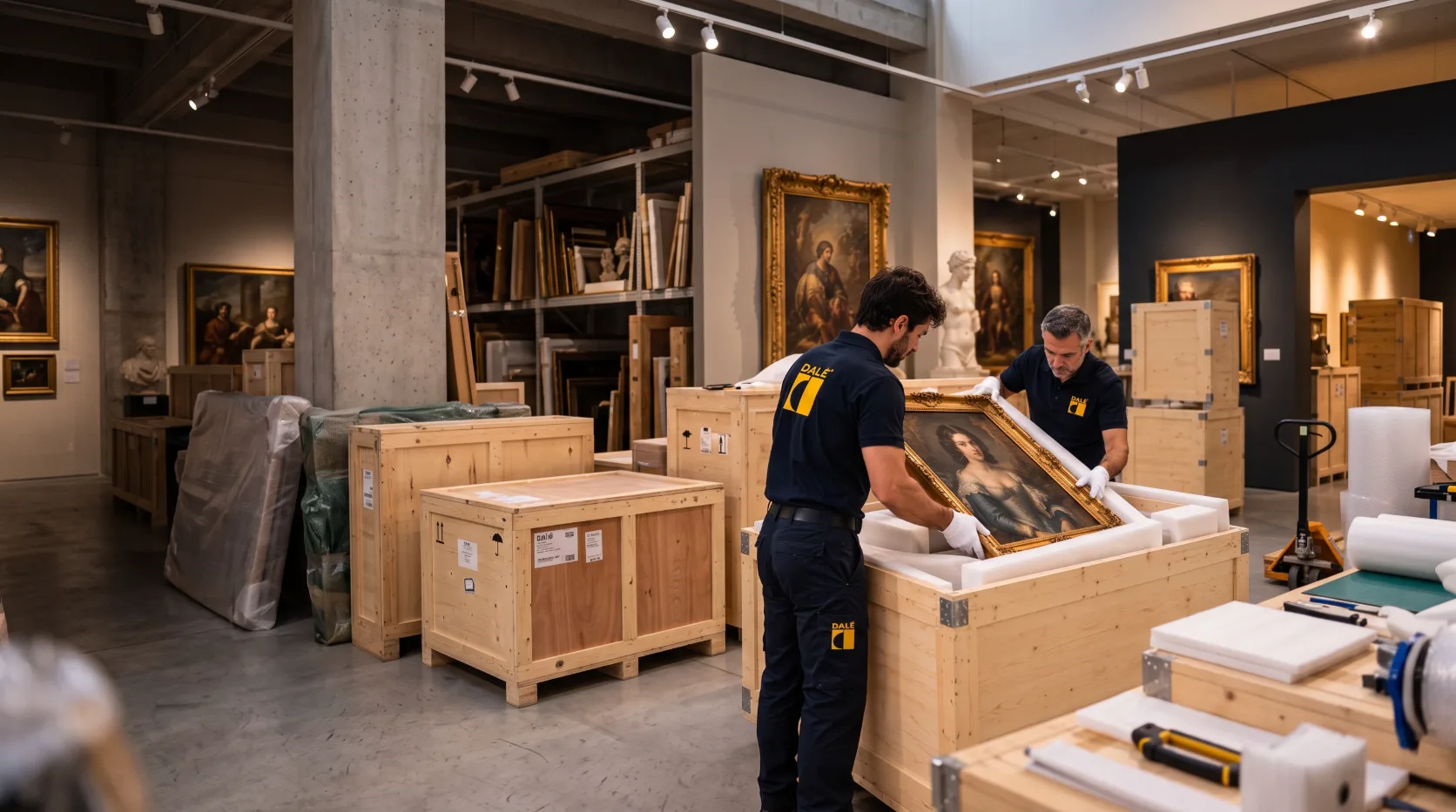
What it contains
- identifying details: artist, title, medium, dimensions, inventory number, owner or lender;
- an overall assessment of the condition of the work and of whether it can be handled safely;
- a description of the individual parts, for a painting for example paint surface, varnish, support, stretcher and frame, with cracks, paint losses, scratches and deformations;
- inscriptions, labels and stamps on the back;
- photographs of the front, back and frame, plus details of critical points, with date and photographer;
- instructions on handling, display and packing;
- the name of the person who examined the work, place and date.
A diagram of the work with the defects marked is often attached, so that whoever checks it on arrival finds the points to verify straight away. It also matters to use consistent terms: "lifting", "loss" or "abrasion" must mean the same thing at departure and on arrival.
When it is done
The first report, the reference one, is written before packing. It is then updated at every important step:
- when the crate is opened at destination, after letting the work acclimatise to its new environment;
- at the installation and de-installation of an exhibition;
- on return, before the work is put back in place.
On touring exhibitions a cumulative report is used that follows the work through all the venues: each check notes only the differences from the previous one. When the lender sends a courier, the courier attends the checks on the lender's behalf.
Who writes it
Usually the lender, its restorer or conservator, the museum registrar or the gallery staff. In Italy, loans of cultural property for exhibitions require the authorisation provided for by Article 48 of the Code of Cultural Heritage (Legislative Decree 42/2004), and the Ministry of Culture's guidance asks for a loan condition sheet (scheda conservativa di prestito) on the ministerial model to be attached, which can be pre-filled by the lender's restorer and checked by the Soprintendenza (the regional heritage protection office).
The freight forwarder does not replace the restorer, but uses the condition report to plan packing and handling: paint that is lifting or a fragile frame changes the way the work is protected. Dalè takes this into account when designing the made-to-measure crate and organising nail-to-nail transport, as in its services for exhibitions and fairs.
Why it matters for insurance
Policies for artworks, including All Risks cover, normally exclude pre-existing defects and natural deterioration. Without a signed report at departure it is hard to show that a crack or a paint loss arose during the journey. If damage emerges on arrival, it must be noted straight away in the new report with photos, and a reservation must be made to the carrier within the prescribed terms.
Common mistakes
- Photos taken in poor light, or without the back of the work.
- Generic descriptions such as "good condition" with no details.
- Opening the crate as soon as it arrives, without letting the work acclimatise to the new environment.
- Not having the report signed by the person delivering and the person receiving.
Sources
- Canadian Conservation Institute – Condition reporting
- Ministero della Cultura (Italian Ministry of Culture) – Guide to exhibition loans (SABAP Cagliari)
- Normattiva – Legislative Decree 42/2004, Article 48
A shipment to organise?
Tell us what you are shipping and where to: we reply with the route, the documents required and a quote.
Related Dalè services
Related glossary terms

