Artwork packing in Brescia. Made to measure for every journey.
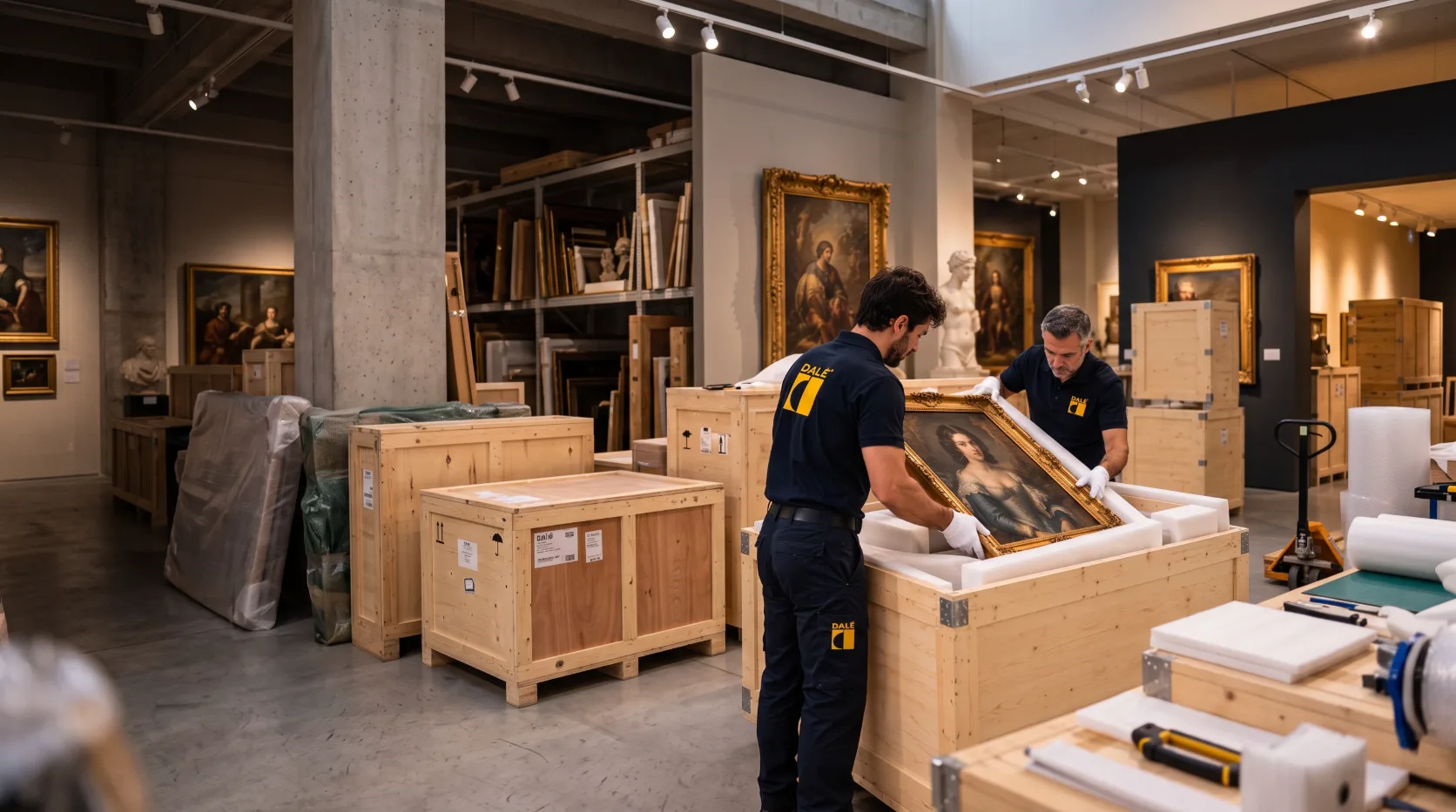
Bespoke packing and wooden crates for paintings, sculpture, design pieces and antiques. We plan and prepare them ourselves in Brescia, even when no transport is needed.
Which document mistakes stop goods?
Incomplete documents, or documents that do not match
An invoice missing the required details, a packing list that does not match the packages, a consignee written in two different ways: these are the most common causes of a customs hold. That is why we ask for the documents before departure and compare them with each other, rather than discovering the mistake at the checkpoint.
A destination never verified
We sometimes receive delivery addresses that nobody has checked and that, on verification, turn out to be incomplete or non-existent. The goods then stop. Before shipping we verify that the consignee and address exist and are consistent with the documents.
Answers to the most common questions.
Do you pack a work without shipping it?
Yes. You can ask us just for the packing or for a made-to-measure wooden crate, and arrange the journey yourself or with the carrier chosen by the buyer. We hand the work back closed and ready to go. If you then decide to leave collection, transport or customs to us as well, the job carries on with the same contact.
When is a wooden crate needed, and when is soft packing enough?
It depends on the work and the journey. Well-made soft packing can be enough for a short run on a dedicated vehicle with little handling. A made-to-measure wooden crate is the right choice for long journeys, for groupage, air or sea shipments, and for works that are fragile, heavy or of high value. We will advise once we have seen dimensions and photographs.
Can I insure a work I have packed myself?
You can ask for cover, but it is a risk. If there is damage, the insurer examines the packing and may argue that it was inadequate or not done by a professional. That is why, when a client wants All Risks insurance, we recommend packing prepared by us, or at the very least letting us assess yours before the work leaves.
What is the ISPM 15 mark and when is it required?
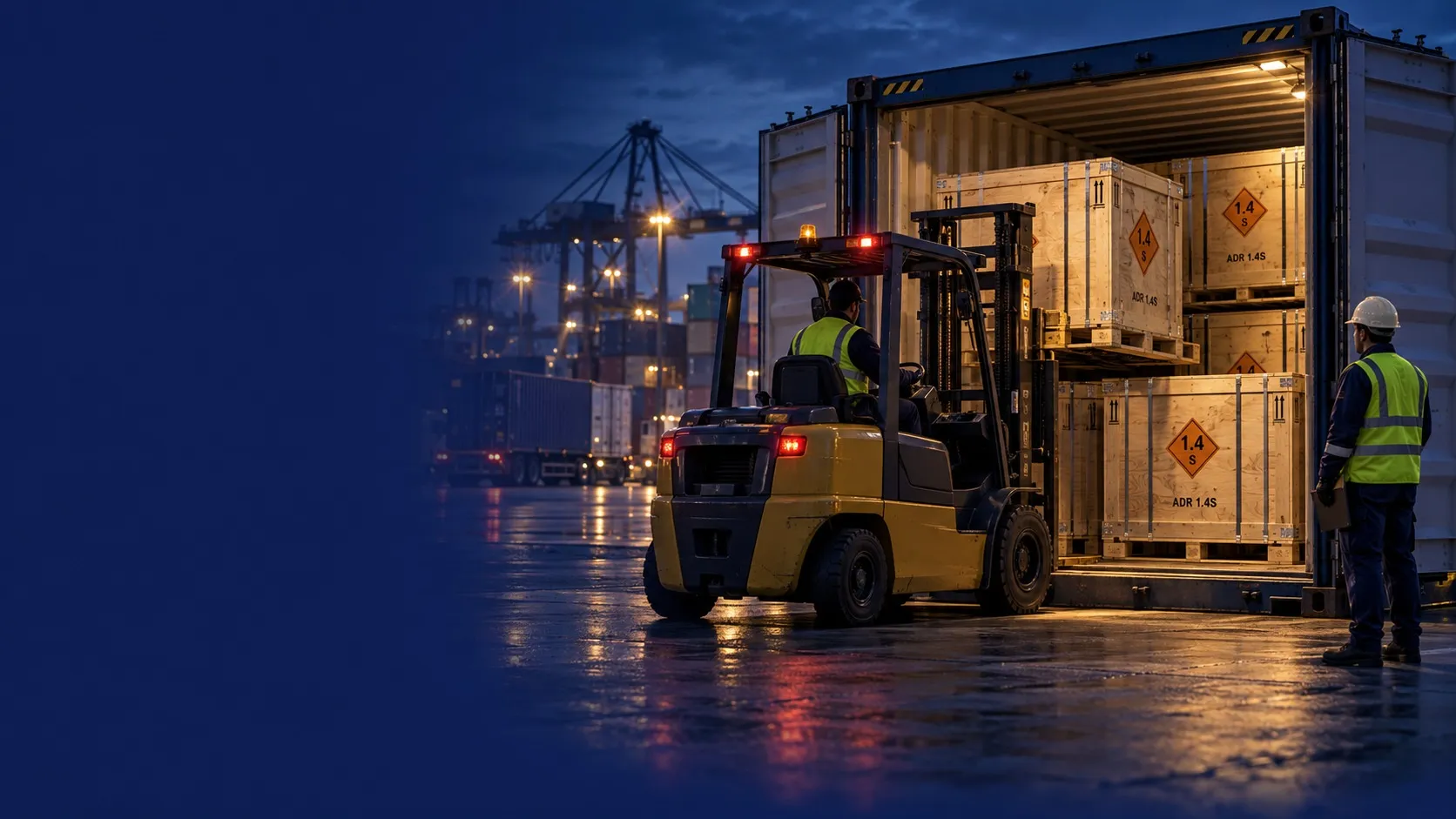
ISPM 15 is the international standard governing wooden packaging in trade between countries, intended to prevent the spread of pests. It applies to shipments going outside the European Union: a non-compliant crate can be stopped at destination. For non-EU destinations we build crates from ISPM 15 compliant timber. It is not required for shipments within Italy and the Union.
What information do you need to prepare the packing?
We need the type of work and its technique, the dimensions including the frame or base, the weight (an estimate will do), a few photographs and the destination, because the journey changes the protection required. If you want the work insured, give us its value too. With this we recommend suitable packing or a crate and explain how it will be made.
How is a made-to-measure pack designed?
Packers as well as forwarders
Dalè Silvio is an international freight forwarder based in Brescia since 1956, and we have been moving works of art for many years. We are packers too: we prepare bespoke packing and wooden crates built to the dimensions of each piece. A team that both packs and ships knows what every leg of a journey puts a work through, from loading at origin to unloading at destination, and chooses the protection to match. If you are looking for artwork packing in Brescia, you deal with one team at Via Bruno Buozzi 14, from the first phone call until the work is closed up and ready.
Technique, size, weight and journey: where we start
No single pack suits everything. We look at four things before deciding. Technique: an oil on canvas, a work on paper, a bronze and a ceramic each have different weak points. Size: a large format needs a structure that will not flex. Weight: it changes how the work has to be supported and lifted. Journey: a short run on a dedicated vehicle asks less of the packing than a shipment handled several times, by air or by sea. We ask you for these details and a few photographs, then recommend a solution and explain our reasons.
Paintings, frames and works on paper
With a painting, the parts to protect are the paint surface, the corners and the frame. The packing has to hold the picture still without resting on the paint, and anything touching the work is chosen so that it leaves no marks. Gilded or carved frames stand proud and chip easily, so we keep them clear of the contact points. Where there is glass, we secure it so that a breakage cannot reach the work. Drawings, prints and photographs suffer from creasing and pressure: they travel flat or well supported, and are never rolled unless we have agreed it with you first.
Sculpture, design pieces and antiques
A sculpture should be held where it is strong, leaving thin or projecting parts free. That is why we shape the inside of the crate around the piece, so the weight bears where it should. Marble and bronze are heavy, ceramic and glass are fragile, and the supports and padding change accordingly. Design pieces often have delicate finishes and parts that come apart, which we pack separately and label. Antique furniture, mirrors, chandeliers and clocks have joints and moving elements that need to be secured for travel. Each piece gets packing designed for it, not adapted from something else.
Soft packing or a wooden crate
For a short run on a dedicated vehicle with little handling, carefully made soft packing can be enough: protective layers, corner guards and a rigid outer shell. When the journey is long, when the work travels alongside other goods, or when it goes by air or sea, a made-to-measure wooden crate is the safer choice. We build it to the size of the work, with the interior shaped to hold it still and the exterior designed to be lifted and secured the right way up. If the crate is also needed for the return trip, we design it to be reopened and closed again.
Why packing matters to the insurer
The works we ship can travel under All Risks nail-to-nail insurance. A policy is no substitute for physical protection, though. After a loss, the insurer looks at how the work was packed and by whom: if the protection proves inadequate, or was not carried out by a professional, the claim may be disputed. Packing designed and made by people who do it for a living is therefore also a safeguard you can demonstrate. When preparing an insured shipment, start with the packing and move on to the policy afterwards. That order avoids arguments at the worst possible moment.
Outside the European Union: ISPM 15 timber
For destinations outside the European Union, wooden packaging has to meet the international ISPM 15 standard, introduced to stop timber carrying pests from one country to another. A crate without the required mark can be held on arrival, with the work inside it. For non-EU shipments we build our crates from ISPM 15 compliant timber. If you already know the work will leave the Union, even at a later stage, tell us straight away: building the right crate from the start is simpler than rebuilding it.
Packing only, without transport
You can ask us for the packing alone. This happens when the work will be collected by a carrier chosen by the buyer, when a gallery is arranging the journey itself, or when a family needs to make a picture safe before a house move or building work at home. We prepare the bespoke packing or crate and hand the work back to you closed and ready. If you later need collection, delivery, customs formalities or a period of storage, your contact stays the same and already knows the work.
The most common mistakes
The first is asking us to ship and insure a work closed in a cardboard box. It can be shipped, but if it arrives damaged the insurer has good grounds to say the packing was unsuitable. The second is packing it yourself without asking for advice: a phone call and a few photographs are enough to find out what is needed. The third is reusing an old crate built for a different work, with dimensions and supports that do not match. The last is giving approximate measurements: a few centimetres change the packing. Measure with the frame on and, if you can, weigh the piece.