What it is
When a work leaves Italy for good, this is permanent export, covered in the entry on the certificate of free circulation. Temporary export, by contrast, concerns a loan for a limited time: exhibitions, shows, art fairs. The work is meant to come back, and the rules are concerned with making sure it returns intact.
What the Code says
Article 66 of the Cultural Heritage Code provides that temporary export for events, exhibitions or art shows of high cultural interest may be authorised, provided that the integrity and security of the objects are guaranteed. The same article lists two cases in which authorisation cannot be given:
- objects at risk of damage during transport or from being kept in unfavourable environmental conditions;
- objects that form the main holding of an organic section of a museum, picture gallery, gallery, archive, library or art or bibliographic collection.
The specific conditions, the deadline for return and any guarantees are set out in the instrument accompanying the authorisation. For a specific case, it is best to speak to the competent Export Office and read the decision received carefully.
How to proceed
- Application. The applicant, usually the organising body or the lender, submits the application with a description of the work, the exhibition sheet, the venue, the security conditions and the insurance cover.
- Assessment. The Ministry checks the condition of the work, the interest of the event, and that the venue and the journey are adequate.
- Authorisation. If positive, it states times and conditions. The departure date is set afterwards, never before.
- Customs. For non-EU countries the work leaves with a temporary export declaration or with an ATA carnet, where the country accepts it for exhibitions. If needed, the European export licence is added.
- Return. The work comes back within the deadline and the file is closed with the re-importation declaration.
The practical side
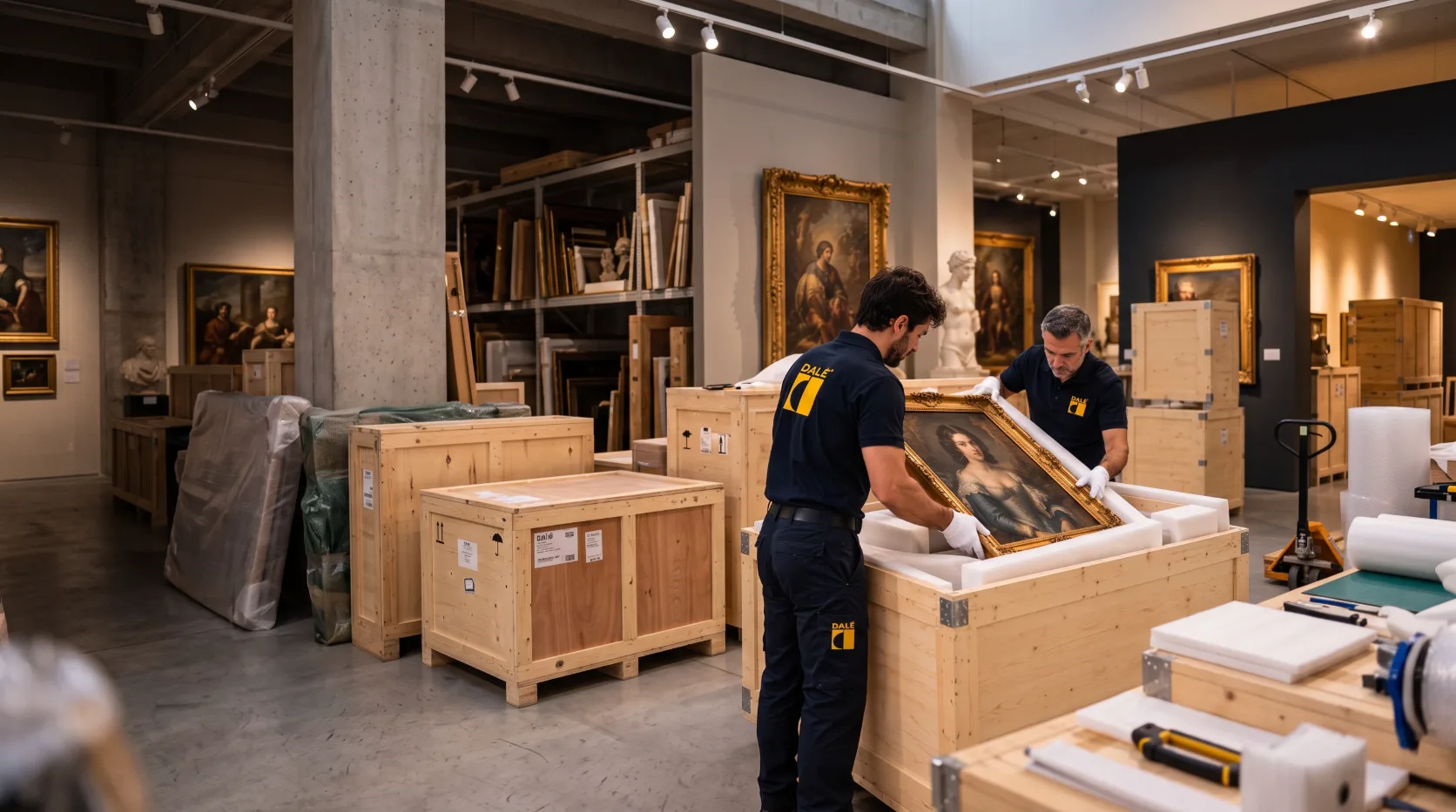
A loan for an exhibition is teamwork. You need a signed condition report at departure and arrival, a museum crate designed for the work, nail-to-nail cover and, often, a courier named by the lender. The crates must be kept during the exhibition, because they will be needed for the return journey.
Practical example
A museum in Lombardy lends a seventeenth-century painting to an exhibition in the United States. The organiser requests authorisation from the Ministry and, once obtained, dates and arrangements are set. The painting leaves in a climate-controlled crate, with a courier and nail to nail insurance. At Italian customs it is declared under temporary export. When the exhibition closes it returns to Italy and the operation is closed with the readmission.
Common mistakes
- Booking the journey and the installation before authorisation.
- Not checking whether the destination country accepts the ATA carnet for exhibitions.
- Underestimating the time to return: a work that does not come back by the deadline risks becoming an irregular export.
- Forgetting permits such as CITES if the work contains protected materials.
Dalè coordinates transport, crates, insurance and customs formalities for the outward and return journeys in its own art department in Brescia.
Sources
- Normattiva: Legislative Decree 42/2004, Article 66
- Directorate-General for Archaeology, Fine Arts and Landscape (ABAP), Service IV: international circulation
A shipment to organise?
Tell us what you are shipping and where to: we reply with the route, the documents required and a quote.
Related Dalè services
Related glossary terms

