What it is
In Italy the protection of cultural heritage is tied to the possibility of exporting it. An ancient artwork, a historic object, a manuscript or an archaeological find cannot permanently leave the country without a check by the State. The certificate of free circulation is the act that closes that check positively: the export office declares that the item, once examined, does not have cultural interest such as to prevent its exit, and therefore can circulate and leave. It is governed by Article 68 of the Code of Cultural Heritage and Landscape (Legislative Decree No 42 of 22 January 2004).
The document concerns permanent exit, that is the sale or stable transfer of a work abroad. For temporary exit, for example for an exhibition, different procedures apply (see temporary exit for exhibitions).
When it is needed
The Cultural Heritage Code protects items of artistic, historical, archaeological or ethno-anthropological interest belonging to certain categories. Works by a living author, or whose execution dates back less than seventy years, are generally excluded from this regime: for these the certificate is not needed, but it is still advisable to document date and author. For older items, or those by an author no longer living, the certificate is the rule for permanent exit, with some simplifications. For works by an author no longer living, executed more than seventy years ago, value also matters: above the threshold of €50,000 (€13,500 for books), permanent exit requires authorisation, that is the certificate; below the threshold no authorisation is needed, but the person concerned submits a substitute declaration to the office, as valid as the certificate. The threshold was €13,500 from 2017 (Law 124/2017) and was raised to €50,000 by Law No 40 of 17 March 2026, in force from 14 April 2026.
Note: this part of the rules has changed recently. Law 40/2026 amended Articles 65 and 68, and the Constitutional Court has also ruled on the subject. Before setting up a shipment, check the text in force and, above all, the practice of the competent export office.
How it is obtained
- Submission. The owner, or their representative, submits the request to the export office, generally at the Soprintendenza (Superintendency) of the area where the work is located, stating the market value for each item.
- Examination. The office informs the competent offices of the Ministry within three days of submission; the Ministry may send comments within the following ten days. The examination covers cultural interest and the appropriateness of the declared value.
- Decision. The office decides and communicates the outcome within forty days of submission.
- Issue. If positive, the certificate is drawn up in three originals (one for the office's file, one for the person concerned, who has it accompany the item, one for the Ministry) and is valid for five years.
The applicant may withdraw the application before learning the decision. If instead the office considers that the item has significant cultural interest, the procedure turns into a proceeding for declaration of cultural interest under Article 14 of the Code: the work can no longer leave permanently and may become a protected asset.
After the certificate: customs and shipping
The certificate is not enough to leave the European Union. To export outside the Union works that fall within the categories and thresholds of Annex I to Regulation (EC) 116/2009 you also need the European export licence, issued by the export office. At customs the export declaration refers to the documents; if the works contain protected materials such as ivory or tortoiseshell, a CITES permit may also be needed.
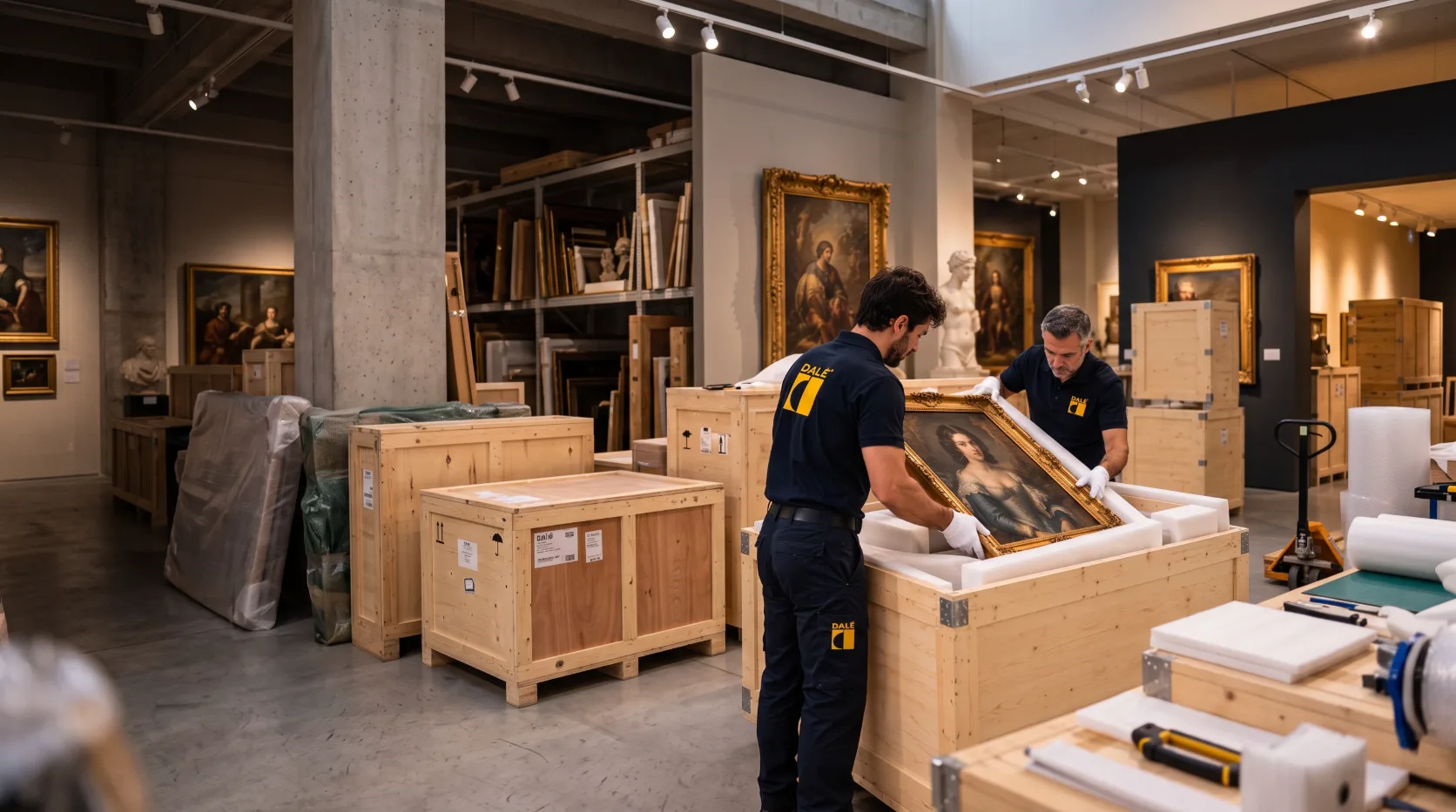
Dalè prepares shipments of artworks with made-to-measure crates, insurance and customs formalities from its customs department in Brescia; the request for the certificate, however, remains the responsibility of the owner or their representative, because it is a State assessment of the work, not a customs formality. It is best to submit it in advance, because the forty days run from submission and the time to deliver the works to the office is not always short.
A practical example
A gallery in Brescia sells a seventeenth-century painting to a Swiss collector. First of all it photographs and describes the work, determines the value and files the application with the export office, with images and a data sheet. Once the certificate is obtained, it orders packing, the European licence and transport with nail-to-nail insurance. At customs the certificate, licence, invoice and documents are presented; the work leaves in a crate with the condition report.
Common mistakes
- Shipping the work before having the certificate: the unlawful export of cultural property is a criminal offence.
- Stating an inappropriate value: the office assesses it and may challenge it.
- Believing the certificate is valid for temporary exit or for another item.
- Letting the certificate expire: it lasts five years and then must be requested again.
- Forgetting that the Italian certificate does not replace the European licence.
Sources
- Normattiva - Legislative Decree 42/2004, Article 68
- Normattiva - Legislative Decree 42/2004, Article 65
- Gazzetta Ufficiale: Law No 40 of 17 March 2026
A shipment to organise?
Tell us what you are shipping and where to: we reply with the route, the documents required and a quote.
Related Dalè services
Related glossary terms

