What it is
Regulation (EU) 2019/880 concerns the introduction and the import of cultural goods. It starts from a principle: the Union must not be a place where cultural goods stolen or illegally exported from the country of origin can enter. It therefore provides a ban on goods that left their countries in breach of local laws and, for the categories listed in the annex, controls at entry.
The text had been in force for some time, but the rules on documents became operational only on 28 June 2025, when the ICG electronic system, short for Import of Cultural Goods, went live.
Two levels of control
- Import licence. Required for goods considered particularly at-risk heritage, listed in Part B of the annex. It is issued by the competent national authority of the Member State in which the goods are placed under a customs procedure, after a check on provenance and on the lawfulness of their export.
- Importer statement. Required for lower-risk goods, listed in Part C of the annex. The importer declares, under their own responsibility, that the goods were lawfully exported from the country of origin, and attaches the data to identify them.
The age and value thresholds are in the annex and vary by category: before shipping, check the category on the official text, because different popular sources report different limits. From 7 July 2026, updates to the TARIC codes and to the table of correspondence of categories are expected, so the customs code needs to be rechecked.
Exceptions
Implementing Regulation (EU) 2021/1079 provides some exceptions to the documents, for educational, scientific or research purposes and for goods that return after a temporary export. Someone bringing works to an art fair in the Union and re-exporting them at the end of the event normally follows different rules from someone importing them to stay. The case should be read on the official guide.
How to proceed
- You identify the category of the good in the annex and the related customs code.
- You submit the licence application, or the importer statement, in the ICG system.
- With the licence or statement, the goods are presented to customs and placed under the chosen procedure: release for free circulation, temporary admission or other.
The importer must be able to prove provenance: invoices, export documents, catalogues, the history of the work. The older the good and the less documentation it has, the longer the check.
Practical example
A gallery in Brescia buys an antique ceramic at an auction outside the Union. Before transport it checks whether the category requires a licence or a statement and collects the provenance documents. It submits the application, waits for the outcome and only then schedules the arrival; the good is then declared at customs with the document. If the piece contains ivory or precious woods, a CITES permit is also considered.
Common mistakes
- Shipping before having the licence: the goods may be stopped at the border.
- Not keeping the provenance documents.
- Confusing this regime with the Italian rules on export. For those, see the Export Office and the Cultural Heritage Code.
- Using generic customs codes: the tariff heading must match the category.
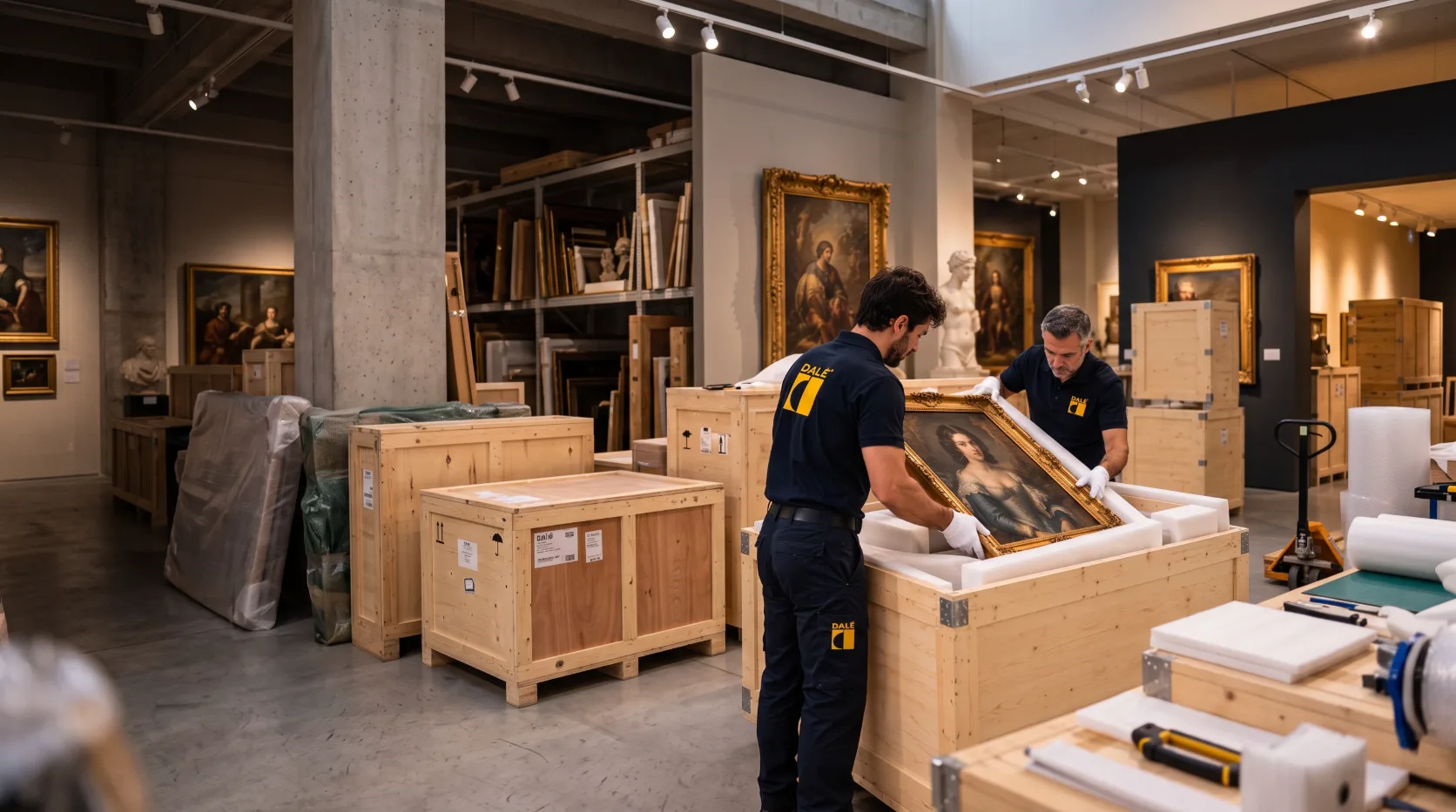
Dalè handles the customs formalities for entry in its own customs department in Brescia and coordinates transport and packing of the works that arrive.
Sources
- EUR-Lex: Regulation (EU) 2019/880
- European Commission: cultural goods, prohibitions and restrictions
- European Commission: new import controls on cultural goods
A shipment to organise?
Tell us what you are shipping and where to: we reply with the route, the documents required and a quote.
Related Dalè services
Related glossary terms

