What CITES is
The acronym stands for Convention on International Trade in Endangered Species of Wild Fauna and Flora. The text was signed in Washington on 3 March 1973 and almost every country in the world is now a party. It does not ban all trade in animals and plants: it puts it under control, so that international trade does not drive a species to extinction. Whoever ships an object containing a protected material must therefore show, with a document, that its trade is lawful.
Species are listed in three appendices. The first covers the most threatened ones, for which trade is allowed only in exceptional cases. The second covers species that could become at risk if trade were not regulated. The third lists species that a single country has asked to protect with the help of the others. Each appendix brings different rules and documents, and the lists are updated after the conferences of the Parties, so a check made years ago may no longer be valid.
How it applies in Europe and in Italy
The European Union applies the Convention through Regulation (EC) No 338/97, which groups species into four annexes, marked with the letters A, B, C and D. Annexes A, B and C correspond, with some differences, to the three CITES appendices; Annex D covers species monitored because of the volume of trade. The regulation is supplemented by implementing rules of the Commission, and applies uniformly in all Member States.
In Italy the main management authority is the Ministry of the Environment and Energy Security. Since 1 March 2024, under Law 74/2023, import and export licences are issued by the Ministry of Agriculture, Food Sovereignty and Forests through the Carabinieri CITES units, to which the application is submitted. The Carabinieri CITES also carry out checks on the ground. Violations are punished by Law 150/1992, which provides for criminal penalties as well. Operational details, such as forms and timing, change over time: they should be read on the ministries' websites.
What it concerns in the art world
Here the subject is less obvious than it seems. A work can contain CITES materials without anyone thinking about it, because they are part of its look or structure:
- Elephant ivory in sculptures, miniatures, inlays, handles, chess pieces or keys;
- Sea turtle shell (tortoiseshell) in boxes, combs, frames and inlays;
- Coral in jewellery, rosaries, furnishings;
- Precious woods, in particular many species of rosewood of the genus Dalbergia, used in furniture, frames and musical instruments;
- Skins, feathers and horns of protected animals in ethnographic objects, tapestries, fans, headdresses and trophies;
- Musical instruments with parts in ivory, in protected woods, or with strings and plates of animal origin.
In the art world what counts is what the object is made of, not only its age. A modern work with an ivory detail or an antique piece of furniture with a tortoiseshell inlay may require a permit, even if they are otherwise ordinary. For some categories there are exemptions, such as the one for musical instruments finished with rosewood, or for very old worked objects, but they are always decided with the authority and with documentary proof, not by instinct.
Not only art
CITES also concerns everyday goods: bags, shoes and belts in reptile or crocodile skin, watches with exotic-skin straps, orchids, cacti, some traditional medicine products, sturgeon caviar, stuffed animals. A private traveller bringing back a souvenir and a company importing a batch of hides are in the same situation: the same regulation, the same need for a document.
Which documents
- Export permit from the country of departure or, for those exporting from the Union, from the competent Member State.
- Import permit for the most protected specimens, and import notification for the less protected ones, as provided by the regulation.
- Re-export certificate for specimens that entered the Union lawfully and are due to leave again.
- Certificate for commercial use within the EU, when a specimen of Annex A is sold or exhibited for commercial purposes.
The documents must accompany the goods and be presented to customs at the time of the declaration. A missing or incorrect permit leads to the goods being held and possibly confiscated.
Practical example
A gallery in Brescia sells to a US collector an eighteenth-century box with tortoiseshell inlays. The work is more than seventy years old and, if it exceeds the value threshold, goes through the Export Office. But the inlay is a CITES material: you need to check the applicable exemption, obtain the permit or certificate required and check that the country of arrival admits it too. If one of the steps is missing, the crate stops, at departure or on arrival.
Common mistakes
- Thinking an antique object is automatically exempt: age alone is not enough.
- Thinking the Italian permit is valid in every country: each State checks on its own and may require its own permit.
- Not writing the composition of the object on the invoice and the packing list.
- Checking an old list of species: the appendices are updated.
- Forgetting that the CITES permit is in addition to those on cultural goods, not a replacement. See export licence for cultural goods.
The role of the freight forwarder
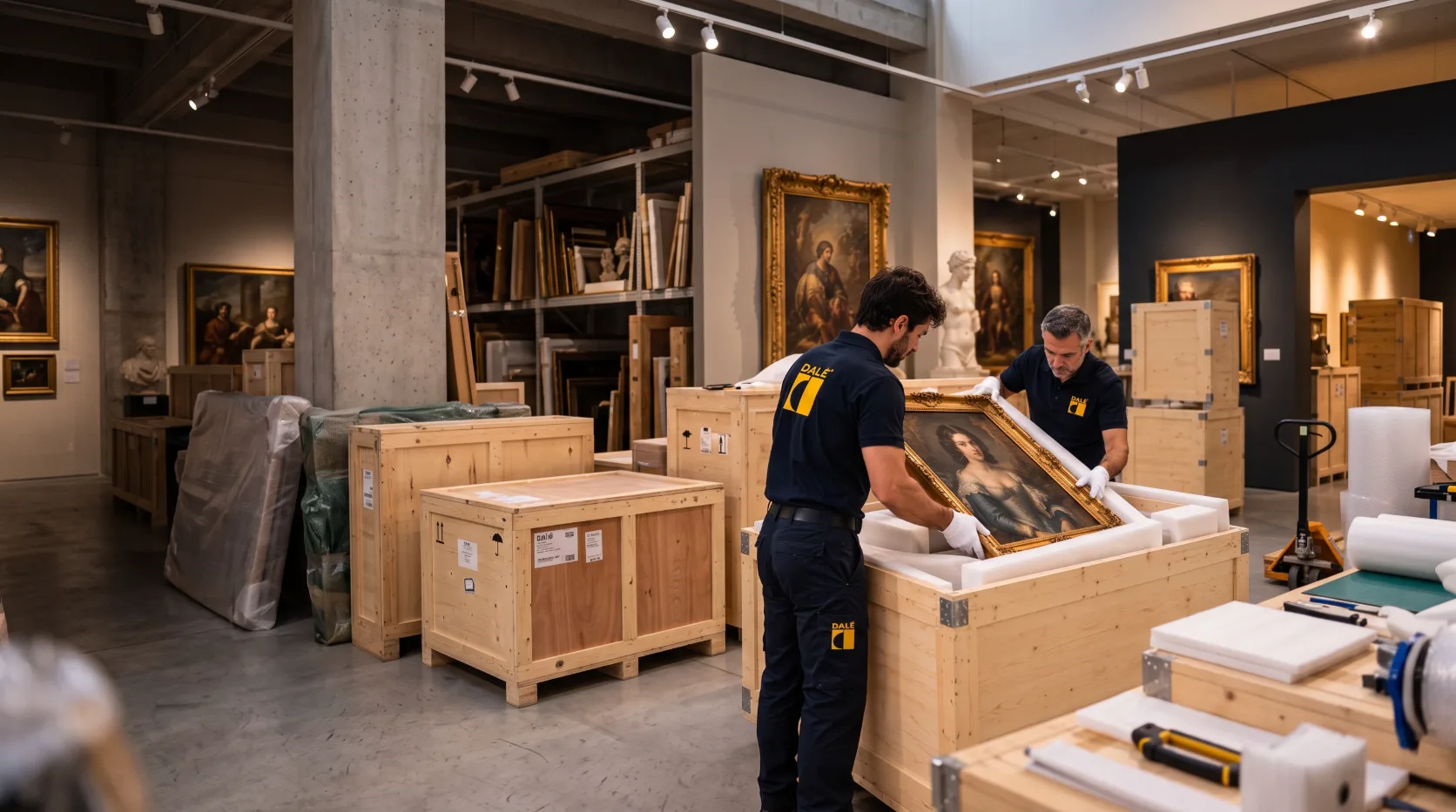
The freight forwarder does not issue permits, but helps to recognise when they are needed and to coordinate them with the rest of the file. Dalè checks this at the quotation stage for works of art and for goods containing protected materials of animal or plant origin, and coordinates it with the declaration in its customs department in Brescia. Information on the composition of the object must arrive before the pick-up request, not after.
Sources
- EUR-Lex: Regulation (EC) No 338/97 on trade in species of wild fauna and flora
- Normattiva: Law 150/1992, offences relating to the application of CITES
- CITES Secretariat: what the Convention is
- MASE (Italian Ministry of the Environment): CITES, authorities and responsibilities in Italy
A shipment to organise?
Tell us what you are shipping and where to: we reply with the route, the documents required and a quote.
Related Dalè services
Related glossary terms

