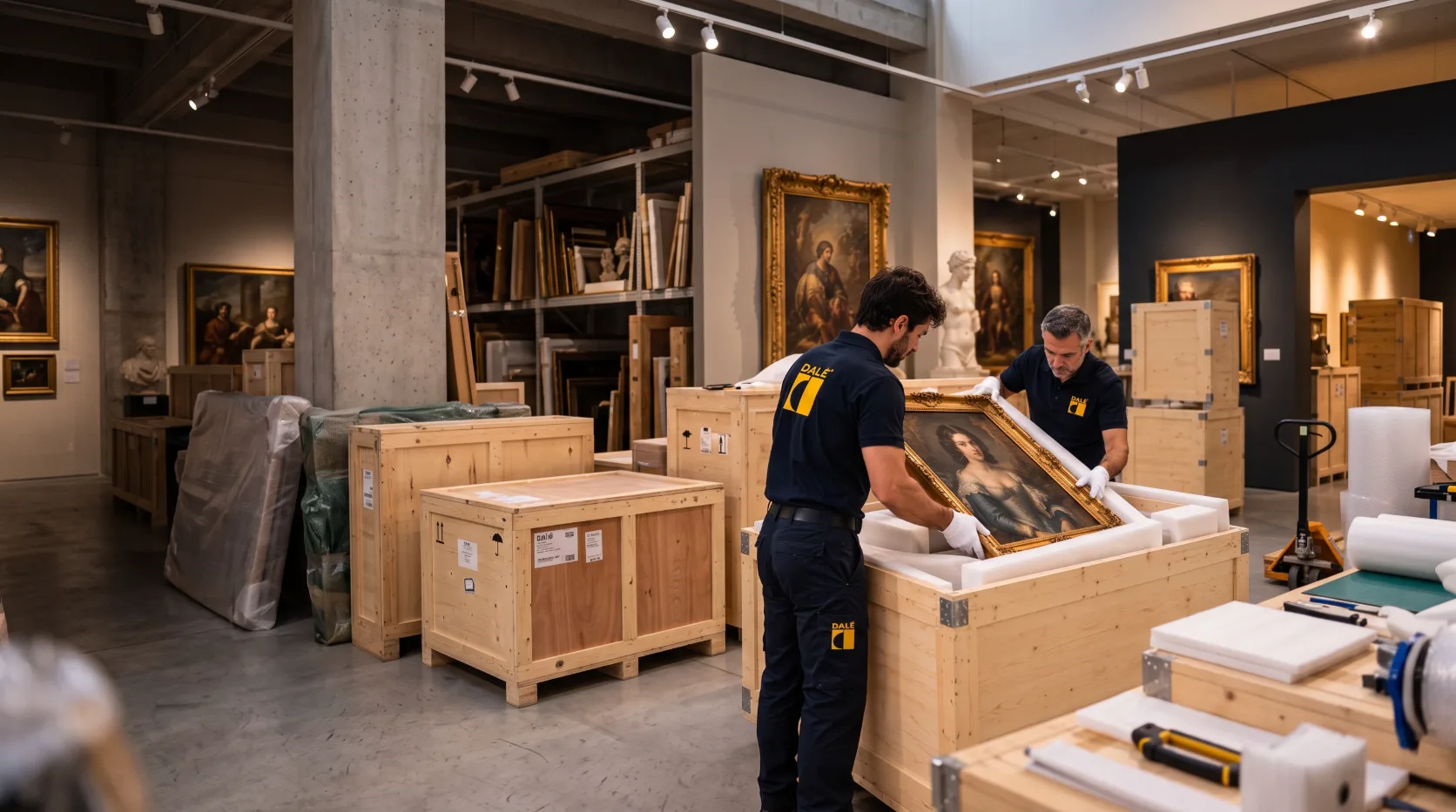
What it is and where it is
The Export Offices for art objects and antiquities are part of the cultural heritage administration. Across Italy they are normally located at the Superintendencies, and each one serves a specific area: the updated list with addresses and contact details is published by the Directorate-General for Archaeology, Fine Arts and Landscape. You check how to submit an application on the website of the competent office, but the work must in any case be presented to the office, in person or at an agreed location.
When you need to apply to the office
The basic rule is in the Cultural Heritage Code. Works by a living artist, or made less than seventy years ago, are generally outside the rules on circulation (Article 10, paragraph 5). For objects of cultural interest by an artist who is no longer living, made more than seventy years ago, permanent export is prohibited until their interest has been verified (Article 65). This gives three routes:
- value above the threshold: if the value exceeds €50,000 (€13,500 for books), you need authorisation, that is the certificate of free circulation;
- value below the threshold: no authorisation is needed, but the exporter must show the office, by a self-declaration, that the work falls within the exempt case;
- permanent export outside the Union: besides the certificate, for the categories of goods in Regulation (EC) No 116/2009 you need the European export licence, which is requested from the same office and is valid throughout the Union for up to twelve months.
The €50,000 threshold has been in force since 14 April 2026 (Law No 40 of 17 March 2026): before that it was €13,500.
How the procedure works
Whoever applies for the certificate submits the declaration and the work to the office, stating the market value of each piece. Article 68 of the Code sets out the steps: the office informs the competent ministerial offices, checks that the declared value is fair, and decides with a reasoned opinion within forty days of the object being presented. The opinion considers artistic, historical, archaeological, ethno-anthropological, bibliographic, documentary or archival interest.
There are two possible outcomes. With the certificate, the work may leave, and the certificate lasts five years. With a refusal, the work does not leave and the procedure for declaring cultural interest under Article 14 begins: the object stays in Italy and comes under protection. While the application is pending, the applicant may withdraw the declaration.
Practical example
A gallery in Brescia sells an oil painting by a deceased painter, made in the late nineteenth century, to a Swiss collector. The work is more than seventy years old and its declared value exceeds the threshold. The gallery submits the application to the competent office with photographs, details of the work and its value. The office decides; only after the certificate and, for Switzerland, with the European licence, is the collection date set.
Common mistakes
- Setting the departure before the outcome. Timing depends on the office: the date is agreed afterwards, never before.
- Mixing up temporary and permanent export. For an exhibition with a return, you follow the temporary export procedure, which has its own rules.
- Forgetting protected materials. A work containing ivory or precious woods may also need a CITES permit.
The role of the freight forwarder
The decision belongs to the office, and nobody can anticipate it. Dalè handles the paperwork with the Export Offices in its own art department in Brescia: it checks which authorisation is needed, prepares the documents and coordinates them with packing, customs and transport. The customs part of the export comes afterwards, with the declaration and the check of licences at the customs office of exit.
Sources
- Directorate-General for Archaeology, Fine Arts and Landscape (ABAP), Service IV: international circulation and Export Offices
- Normattiva: Legislative Decree 42/2004, Cultural Heritage and Landscape Code
- European Commission: cultural goods, prohibitions and restrictions
- Gazzetta Ufficiale: Law No 40 of 17 March 2026
A shipment to organise?
Tell us what you are shipping and where to: we reply with the route, the documents required and a quote.
Related Dalè services
Related glossary terms

