What it is
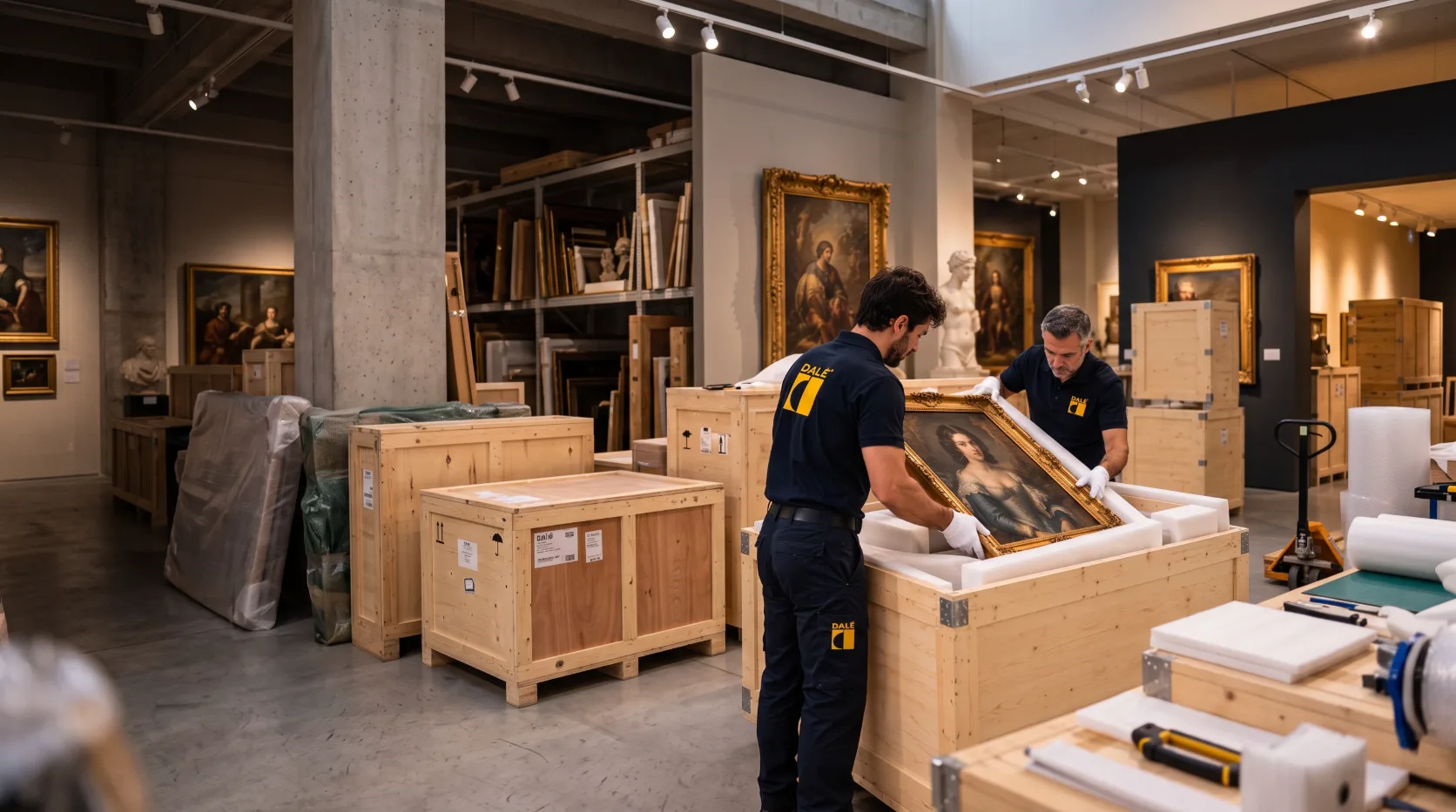
Packing a work is not wrapping it in a soft material. It is a project: it serves to hold the work still, spread out impacts and protect it from humidity, dust and rubbing, on the basis of what is known about the work. First of all you look at its condition, with a condition report and detailed photographs, then dimensions, weight, technique, fragility and route. The solution comes from this.
The main levels of protection
- Soft packing. Soft layers of paper, film and foam, sometimes with cardboard or panel reinforcements, for short journeys in a dedicated vehicle. See the entry on soft packing.
- Transport frame. A light structure, in wood or another material, that stiffens the work or supports it without touching the surface. It is used for large canvases, mirrors, panels and sculptures with protruding parts.
- Made-to-measure wooden crate. A rigid shell with padding and supports shaped to the work, designed for long journeys, groupage, air, sea and heavy or valuable works. In the museum version it also has thermal insulation: climate-controlled museum crate.
- Double crate. The work is suspended in an inner crate that sits inside an outer one, for the most fragile works.
Materials and common-sense rules
Materials in contact with the work must be neutral, with no acids or substances that transfer to varnishes, metals or paper. Papers and films suitable for conservation are used, while plastics with air bubbles, such as bubble wrap, must be kept away from painted or delicate surfaces. Paintings normally travel upright, with clear handling indications on the side; sculptures rest on shaped supports. Frames must be protected, and if they are detachable they are packed separately.
The wood of crates, for export outside the Union, must comply with the international standard ISPM 15: heat treatment bringing the core of the wood to at least 56 degrees for at least thirty minutes, and a mark applied. Plywood and reconstituted panels are excluded from the standard. See the ISPM 15 guide.
How to choose
There is no single rule: fragility, value, vehicle, number of handovers and destination all count. Well-done soft packing may be enough in a dedicated vehicle for a few hours; the wooden crate is the prudent choice for air and sea, for works of great value and for those who want solid insurance cover. A work packed by non-professionals can also put compensation in doubt: the insurer may contest that the protection was not adequate.
Practical example
An artist in Brescia has to ship a large canvas to a gallery in Germany, and a small bronze to a fair in the United States. The canvas, in a dedicated vehicle, travels with soft packing and a transport frame. The bronze, which goes by air and through customs, leaves in an ISPM 15 crate with shaped supports. Two different solutions because the leg, the vehicle and the risk change.
Common mistakes
- Packing it yourself and finding out afterwards that it was not enough.
- Wrapping a painting with materials in direct contact with the surface.
- Measuring the work without the frame or base.
- Deciding the packing at the last minute, when all the attention goes to the export documents.
- Opening the crate as soon as it arrives, without allowing time for acclimatisation.
Dalè prepares packing and made-to-measure wooden crates at its hub in Brescia, even when transport is not needed. For advice, dimensions, weight, technique and a few photographs are enough. See also packing works of art in Brescia.
Sources
A shipment to organise?
Tell us what you are shipping and where to: we reply with the route, the documents required and a quote.
Related Dalè services
Related glossary terms

