What it is
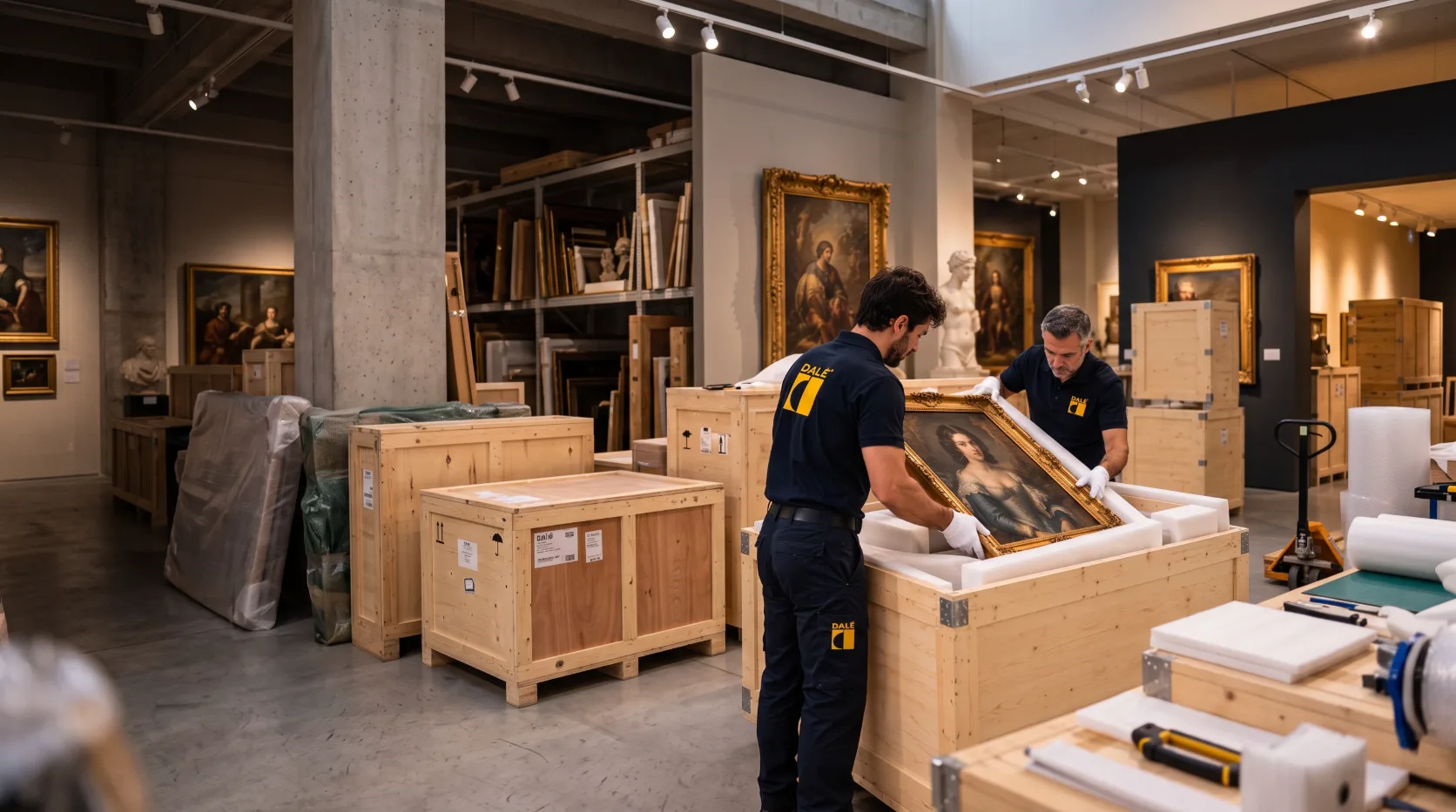
The expression is taken from English and refers to the set of non-rigid protections with which a work is dressed for transport. Layers of neutral paper or film in contact, foams and cushioning materials on the outside, often a covering of sheets or blankets, and sometimes cardboard or panel reinforcements on the corners and faces. It may seem a simple packing, but if done well it is planned work, not luck.
Advantages
- Lightness. It weighs less than a crate and is easier to carry in places with narrow access.
- Reuse. It is often made with materials that can be reused, for example for touring exhibitions.
- Quick preparation, compared with a crate to be built from scratch.
- Adaptability. It is adjusted in a short time to the dimensions of the work.
Limits
Soft packing protects against rubbing and light impacts, but does not withstand the weight of other loads and does not have the thermal insulation of a museum crate. It is not recommended for long journeys, groupage, air or sea shipments, or for very fragile, heavy or high-value works. If it is used on a journey with several handovers, the risk of an impact grows.
When it is enough
- The journey is short and in a dedicated vehicle, with few handovers.
- The work is sturdy and has a surface that tolerates contact.
- There are no stops in a warehouse, transhipments or stacking.
- The journey stays within an area where climate conditions are stable.
In case of doubt it is decided work by work, after seeing dimensions and photographs. A work in soft packing must in any case be accompanied by experienced people, as in the white glove service.
Practical example
A gallery in the province of Brescia takes four small and medium-sized canvases to a fair in the city, in a dedicated van, in a single day. The canvases are protected with neutral paper, film and cardboard panels on the sides, and secured to an internal support in the vehicle. For the return the same packing is reused. If instead the same works had to travel by air, they would be put in wooden crates compliant with ISPM 15.
Common mistakes
- Using film and plastics in direct contact with paint and varnishes.
- Thinking it is enough even for a long journey.
- Insuring the work without checking that the insurer accepts the type of packing.
- Stacking other cargo on the work.
Dalè assesses with you, after dimensions and photographs, whether soft packing is enough or a crate is needed: see packing works of art.
Sources
A shipment to organise?
Tell us what you are shipping and where to: we reply with the route, the documents required and a quote.
Related Dalè services
Related glossary terms

