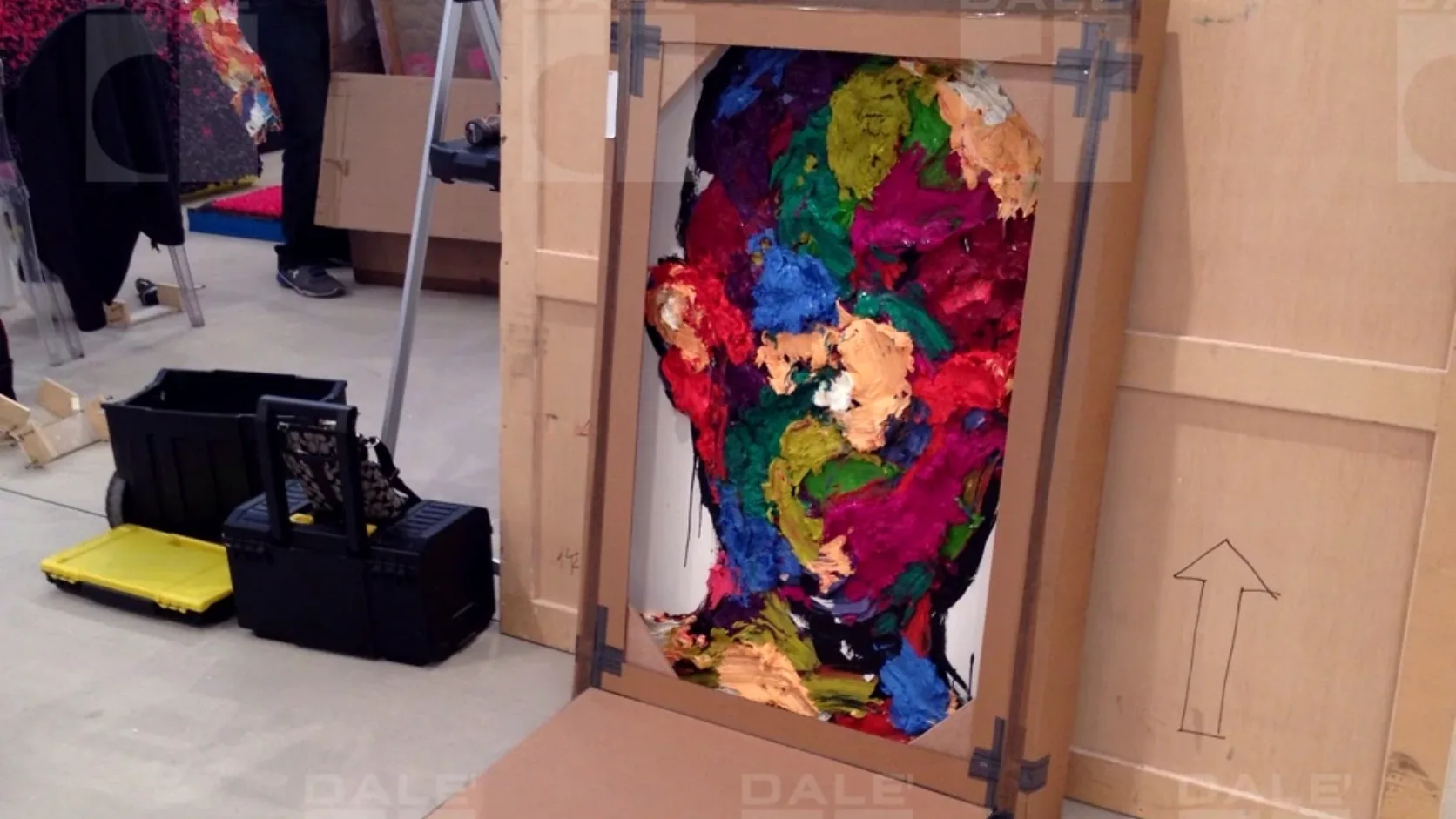
What it is and why "fragile" on the box is not enough
A label saying "fragile" protects nothing. It helps whoever handles the goods, but in international transport a package is loaded and unloaded several times, often with mechanical equipment, and passes through different hands. Real protection lies in the packing: a package that survives a one-metre drop is better than one that relies on nobody dropping it. The marking is an aid, not a guarantee.
The right packing
- Suitable box: double-wall cardboard or reinforced boxes with a sturdy closure; for heavy or valuable pieces, wooden crates or cages. See wooden crate.
- Internal protection: the product must not touch the walls. Use cushioning in sufficient quantity.
- Fixing in place: the piece must not move. For single, heavy objects you need shaped supports.
- Separation: different fragile pieces in the same package must be divided, to stop them hitting each other.
- Palletising: packages must stay within the outline of the pallet, well secured with film. See palletising.
Markings and symbols
Handling symbols such as "fragile", "this way up", "keep dry" and "do not stack" are collected in the international standard ISO 780, which concerns packaging for distribution. They should be placed on several sides, clearly visible, and consistent with what is being asked: if a package cannot be stacked, it must also be loaded on its own at the top. An instruction that transport does not respect is a bigger problem than a missing one. For symbols and labels see handling pictograms and labelling. A shock indicator on the package shows whether the shock threshold was exceeded during the journey.
Insurance and liability
The carrier is liable for damage, but within limits. For international road transport the CMR Convention limits compensation to 8.33 special drawing rights per kilogram of gross weight lost or damaged, converted into euros at the exchange rate of the day. For a light, expensive item the compensation may therefore be far below the value. In addition, the carrier may not be liable if the damage results from insufficient packing. That is why cargo insurance is used, which is based on the declared value and provides for a deductible. A precise description and photographic documentation before loading help in the event of a claim.
Common mistakes
- Thinking that the word "fragile" reduces the likelihood of damage.
- Using a recycled, weak box already worn by other journeys.
- Not declaring the real value of the goods for fear of costs: if there is damage, compensation is based on the declared value.
- Declaring "samples" or "assorted goods" without listing what is fragile.
- Neglecting receipt: at destination, note reservations on the delivery note if the package is visibly damaged; see reservation.
Our approach
Dalè prepares industrial packing, export packing and custom crates in its own warehouse in Brescia and knows well the needs of delicate goods such as works of art, for which there is a dedicated page on packing works of art. Before shipping we collect weight, dimensions, fragility and value: these are the data that allow the packing and the insurance cover to be chosen.
Sources
A shipment to organise?
Tell us what you are shipping and where to: we reply with the route, the documents required and a quote.
Related Dalè services
Related glossary terms

