What they are and why they exist
A package passes through warehouses, lorries, ships, aircraft and the hands of people who speak different languages. Pictograms convey the basic instructions with simple drawings. The ISO 780 standard, updated in 2015, defines the symbols used for handling instructions in the distribution cycle. The same standard points out that the symbols should be used only when needed and that they do not include the specific instructions on dangerous goods.
The title of the standard has changed over time: earlier editions spoke of "pictorial marking for handling", today it is "graphical symbols for the handling and storage of packages". The content remains the same: a set of symbols recognisable everywhere.
The most common symbols
- Fragile: a wine glass or a cup, for contents that break if mishandled.
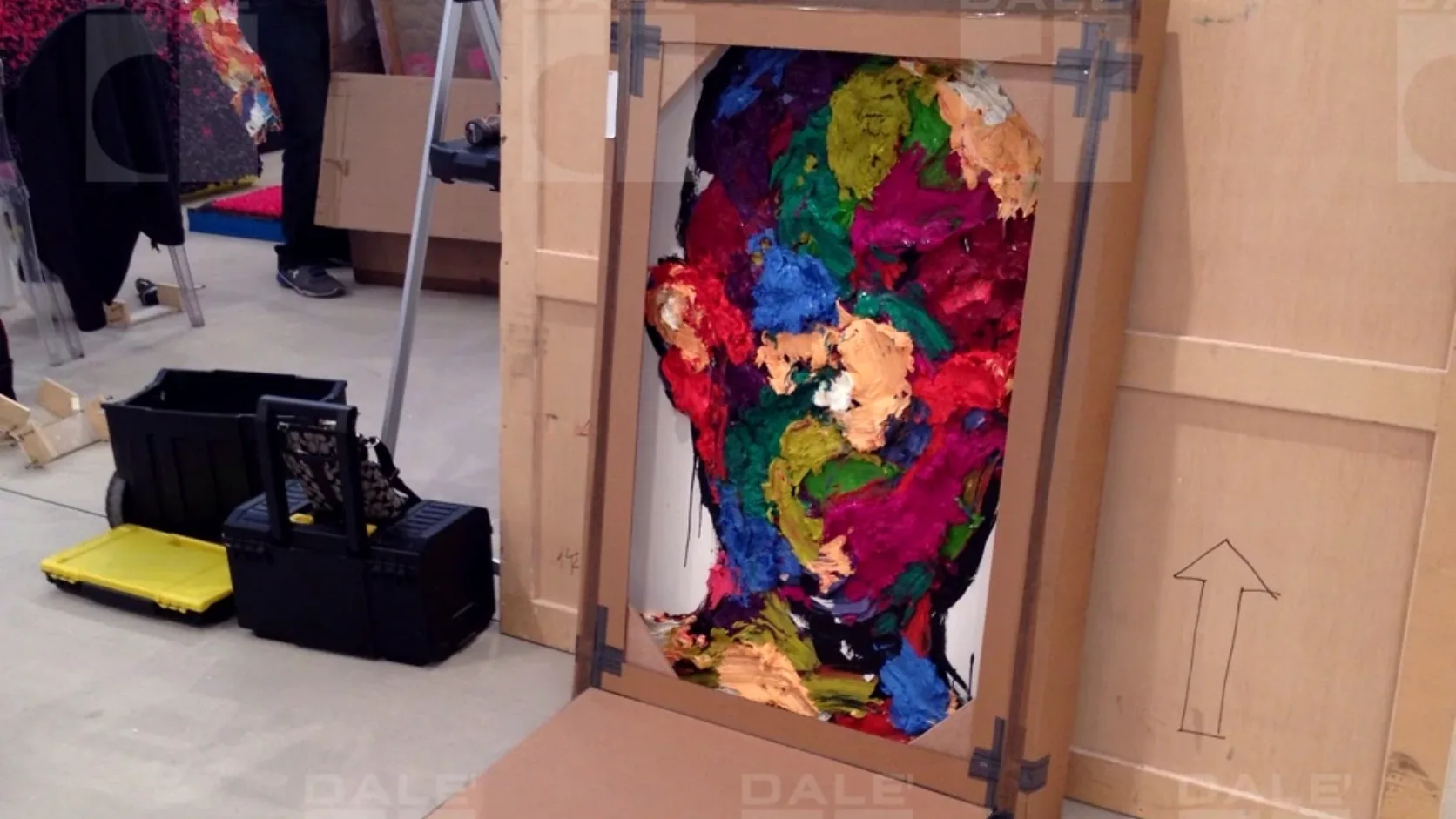
- This way up: two arrows pointing up, for packages that must stay in position.
- Keep dry: an umbrella with drops, for goods that are sensitive to water.
- Protect from sun and heat: a sun crossed out or with a barrier.
- Centre of gravity: a circle with a cross, to show where the centre of gravity is when the package is not symmetrical.
- Sling points: a chain that hooks onto the designated points.
- Do not use hooks: a crossed-out hook, for packages not to be pulled with hand hooks.
- Stacking limit: a stack with an indication of the maximum number of packages that can be piled up.
- Temperature limits: a thermometer with the minimum and maximum values.
The exact drawings and proportions are those of the standard, which is sold by the standards bodies. If you print labels or have packaging made with the markings, it is best to use symbols that comply with the standard, not made-up drawings.
How to apply them
- Choose only the symbols you need: too many signals on the same package get ignored.
- Apply them on at least two adjacent sides, clearly visible and not covered by film or tapes.
- If you have an asymmetrical package, show the centre of gravity so that whoever lifts it can do so without risk.
- Use materials resistant to water and abrasion, especially for sea transport.
- Pair the written instructions with the logistics label carrying the consignee and codes.
Difference from hazard labels
Handling pictograms tell you how to handle the package. Hazard labels tell you what it contains when it is dangerous, according to the regulation of the mode of transport (ADR for road, IMDG for sea, IATA for air). They are two different systems and do not replace each other: a package with dangerous goods can have both, but handling symbols do not act as a class label.
Practical example
A company in Brescia ships a pump on a wooden base to a construction site in Algeria. The crate carries the centre of gravity symbol, shifted away from the middle, the sling points and "keep dry", together with wording in the consignee's language. The forklift driver at the port of arrival immediately finds where to hook the crate.
Common mistakes
- Using the "fragile" symbol on everything, emptying it of meaning.
- Forgetting the centre of gravity on packages that are far off-centre.
- Applying the symbols on the film, which then tears.
- Thinking that the symbol is enough to make the package safe: the packaging still has to be suitable.
For packages prepared by Dalè in Brescia, the markings are agreed with you according to the contents and the route.
Sources
- ISO 780:2015, graphical symbols for the handling and storage of packages
- IMO/ILO/UNECE: CTU Code, packing and securing of cargo transport units
A shipment to organise?
Tell us what you are shipping and where to: we reply with the route, the documents required and a quote.
Related Dalè services
Related glossary terms

