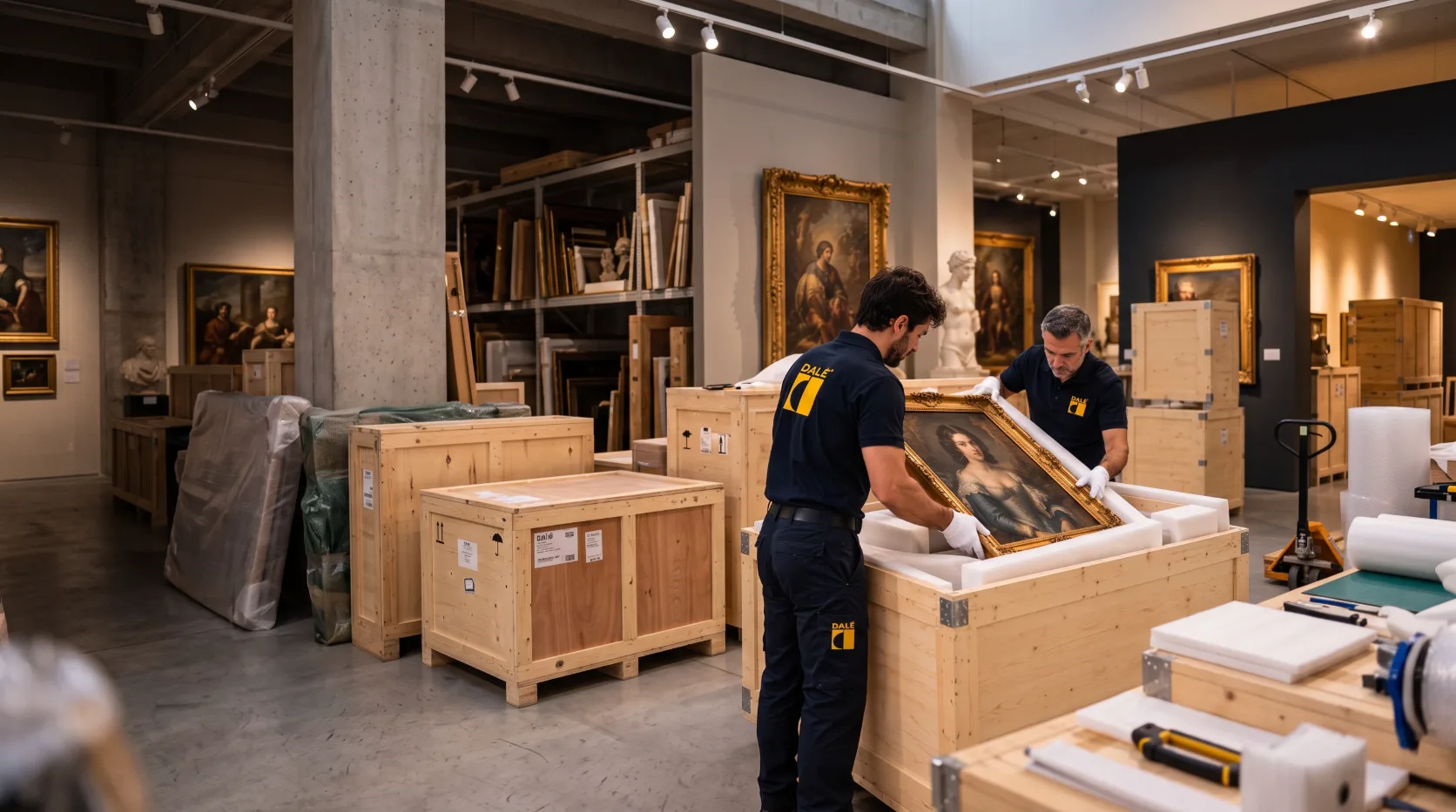
Who they are and what they do
In shipments of valuable works, the courier is the lender's representative: the person the museum, collector or foundation trusts to see with their own eyes what happens to the work. They are not a driver or a transport operator. They do not load the crates and do not drive the vehicle: they observe, check and document.
Do not confuse them with the express courier, which is a parcel carrier.
What they check, stage by stage
- Before departure. They complete or verify the condition report with the work in front of them, together with photographs and measurements. That report is the benchmark for any later damage.
- Packing. They attend the preparation, check materials and fixings, watch the crate being closed and note the number and seals.
- Loading and transport. They check that the crate is loaded the right way up and well secured. On air legs they follow the delivery to the airport and, where provided for, the loading into the hold.
- Arrival. They watch the crate being opened, with timing and methods set by the lender, and complete a new condition report, comparing it with the departure one.
- Installation. They stay present while the work is placed, hung or installed, and check the lighting, climate and security of the room.
- Return. They repeat the same checks on the way back, or delegate a colleague if the journey is long.
When one is required
The presence of a courier is not required by law: it is a condition the lender puts in the loan agreement. Museums and foundations ask for one for the most valuable or delicate works, for long journeys or for complex installations; a gallery selling a painting to a foreign buyer can do without. The decision is almost always the lender's, and the cost is generally borne by whoever receives the work, according to the loan agreement.
The courier often has an insurance role too. Nail-to-nail cover follows the work along the whole route, and the courier's report is the evidence of what happened, when and with whom. If there is damage in transit, a report signed on arrival is worth more than any reconstruction made afterwards.
Practical example
An Italian museum lends a marble sculpture to an exhibition in London. The agreement provides for a courier. The museum's conservator is present in Brescia, or at the pick-up location, when the museum crate is closed, accompanies the transport as far as the airport, receives the work at the exhibition venue and signs the arrival report with the local registrar.
Common mistakes
- Giving the courier's name at the last moment: air transport and some venues ask for the details in advance.
- Confusing the courier with whoever handles the crates: white glove handling is a task for the operators, not for the courier.
- Not agreeing in writing the rules for opening the crate and for acclimatisation.
The relationship with the freight forwarder
The art freight forwarder does not replace the courier but works alongside them: it tells them times, vehicle and transit points, lets them see the packing and loading, and makes the documents available to them. Dalè coordinates transport, packing and customs formalities for works from its hub in Brescia and agrees with the courier the pick-up and delivery arrangements before departure.
Sources
A shipment to organise?
Tell us what you are shipping and where to: we reply with the route, the documents required and a quote.
Related Dalè services
Related glossary terms

