What it is and what it is for
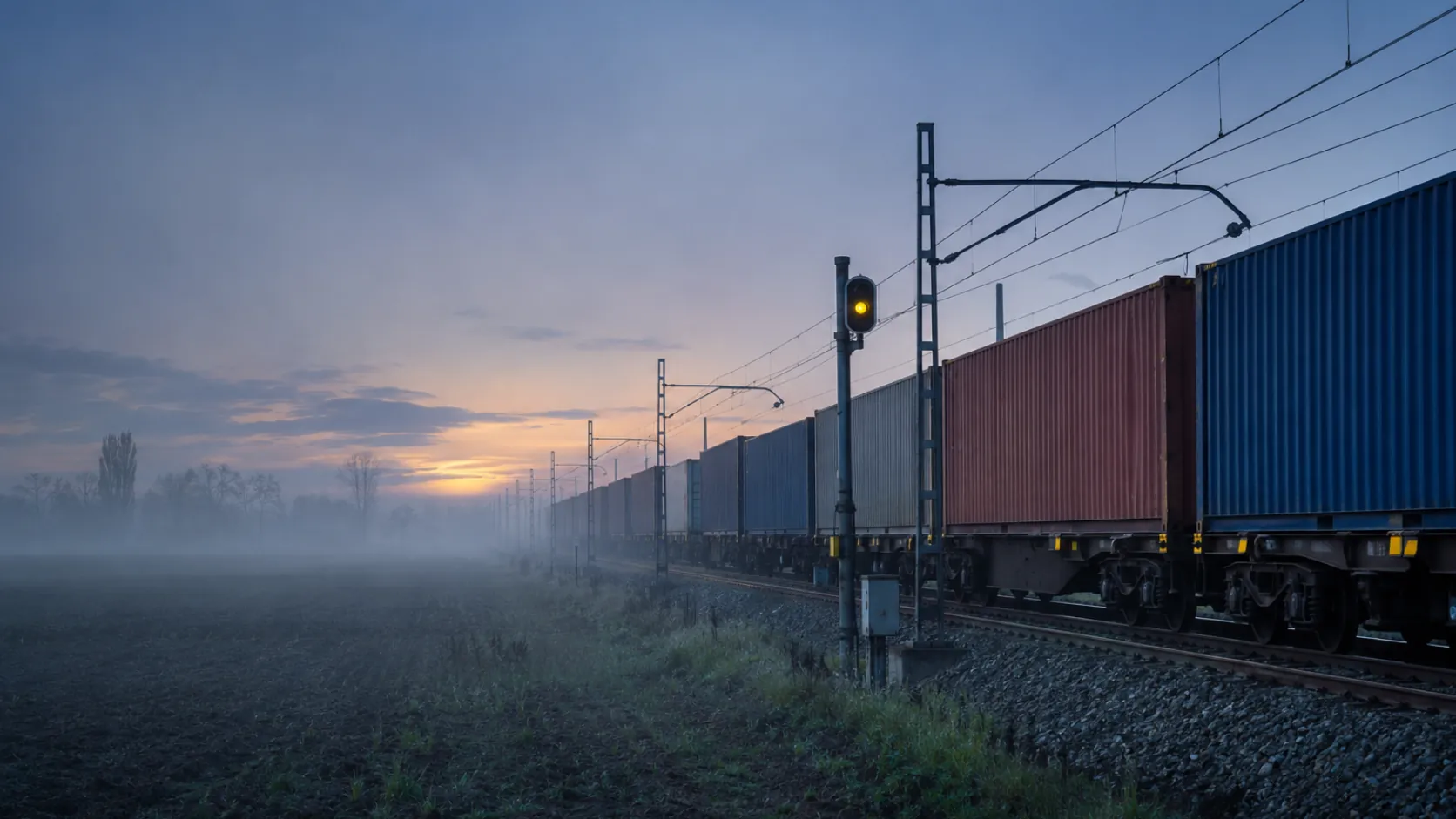
Intermodal transport uses several modes for a single journey without handling the goods themselves: it is the loading unit that moves, not its contents. For this to work, you need places where the changeover happens. Those places are intermodal terminals. A lorry takes the container to the terminal, a crane or lifting machine loads it onto the wagon, the train covers the long leg, another terminal unloads it and a lorry completes the journey to the customer.
In European legislation, combined transport is transport in which the major part of the journey is made by rail, inland waterway or sea, and only the initial or final leg by road, as short as possible. Directive 92/106/EEC sets the common rules; the European Commission proposed a revision in 2023, so it is always worth checking the text in force.
Activities carried out in a terminal
- Receipt and checks. At the entrance (gate) documents, the number and seals of the loading unit and the declared weight are checked.
- Transhipment. With gantry cranes or reach stackers the unit is moved between lorry, yard and wagon.
- Temporary storage. The yard holds containers waiting for a train or for collection; beyond a certain period, storage penalties apply.
- Train make-up. Units are assigned to wagons according to weight, gauge and destination.
- Ancillary services. Weight checks, customs controls where provided, repairs, cleaning, small unloading and loading operations.
Types of terminal
There are inland terminals, linked to an industrial area, an interporto (freight village) or a manufacturing district; port terminals, where the container arrives from the ship and continues by train (the container terminal entry describes them); and terminals for the rolling motorway, where entire articulated lorries are loaded onto the train. Some terminals also have a customs area or a link with the port gates, which reduces the number of steps when goods are in transit to another country.
How to choose a terminal
The choice depends on distance, train frequency and linked destinations. A terminal close to the shipper's premises shortens the road leg, but is of little use if connections are infrequent. A more distant terminal with frequent departures may be preferable. You also look at gate hours, yard capacity, the presence of areas for dangerous goods and the free time allowed before demurrage charges apply.
The system works when units are standard: ISO containers, swap bodies, semi-trailers prepared for lifting. An ordinary semi-trailer cannot always be loaded vertically and needs a suitable wagon or the rolling motorway.
A practical example
A company in the Brescia area exports light machinery to a Northern European country. The container is packed at the company's premises, taken by lorry to the terminal, loaded onto a wagon and carried to a terminal near the destination, where a lorry delivers it. The chain includes two road legs, but the main leg is by rail. What matters to the company is that every step is coordinated: delivery times at the gate, a verified weight if the container continues by sea, consistent transport documents.
Common mistakes
- Arriving at the gate after closing time or past the cut-off, and missing the train.
- Delivering a container whose weight or seal does not match the documents.
Dalè organises transport that combines road, rail and sea, choosing terminals according to the goods and the timing the customer needs, and supports them with customs when required.
Sources
A shipment to organise?
Tell us what you are shipping and where to: we reply with the route, the documents required and a quote.
Related Dalè services
Related glossary terms

