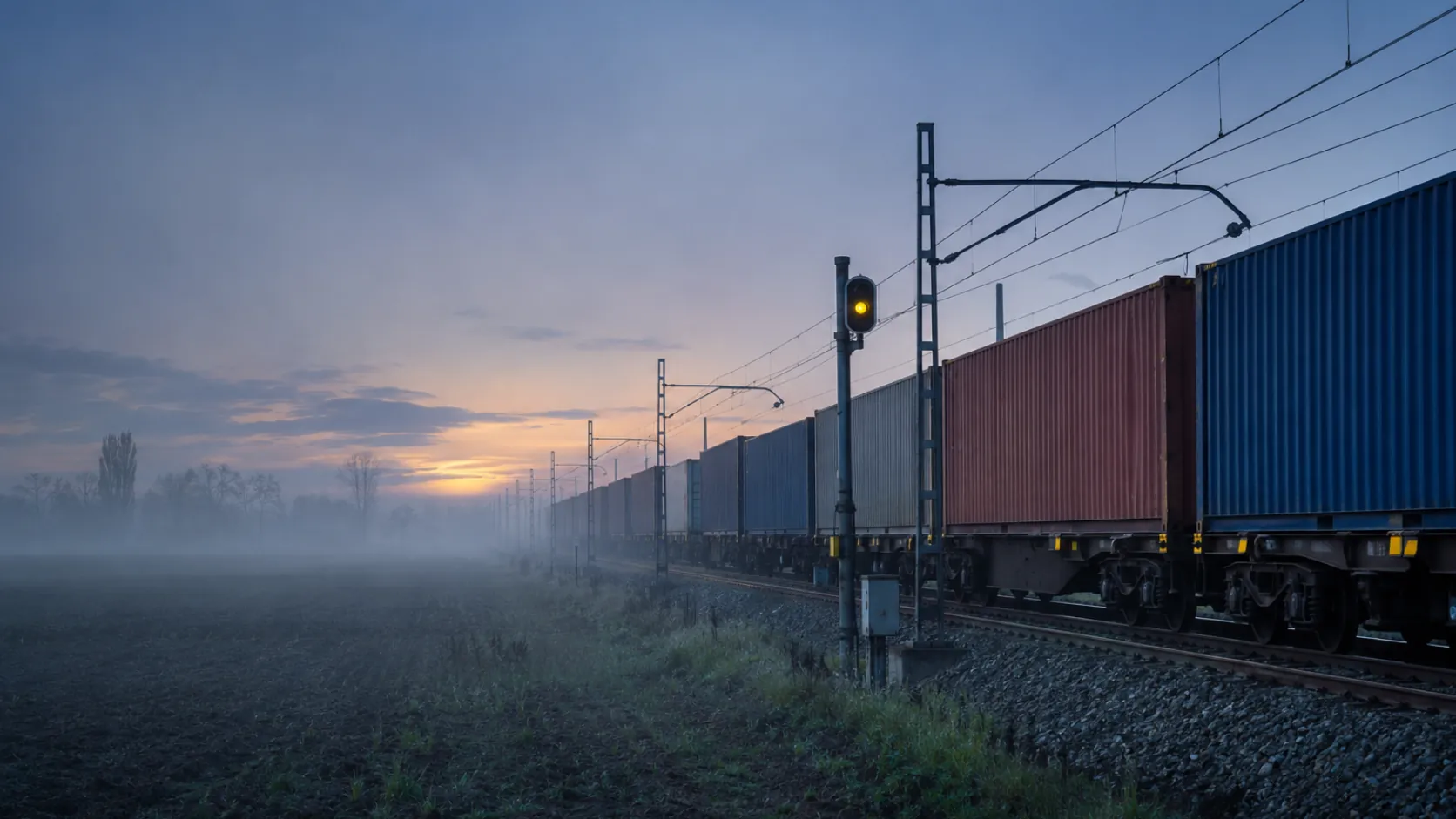
What it is
On the Rolling Highway the vehicle is not broken up: the whole lorry goes onto the train via a ramp, on wagons with small wheels and a low floor so as to fit within the rail loading gauge. The driver follows the convoy in a passenger carriage and, on arrival, takes the lorry again and continues by road. The service is like accompanied transport on a ro-ro ship, but by train.
The aim is to take lorries off the roads on sensitive stretches, for example Alpine passes, where traffic, environmental limits and bans weigh most.
Difference from traditional combined transport
- Rolling Highway: the whole lorry travels, with the driver. No special loading units are needed, but the wagons are heavier and less efficient per tonne of goods.
- Unaccompanied combined: only the loading unit travels, that is a container, swap body or craneable semi-trailer, without tractor or driver. It is more efficient but requires prepared equipment. See combined transport and semi-trailer.
The Rolling Highway is therefore the choice when you want to use the train with ordinary road vehicles, even non-craneable ones, in keeping with the transport company's organisation.
Practical points
- Booking. Places on the train must be booked in advance and vehicles present themselves at the terminal within an acceptance time window.
- Vehicle limits. Height, gauge and mass must respect the limits of the service and of the line.
- Driver. The time spent on the train affects driving and rest times according to specific rules of Regulation 561/2006.
- Dangerous goods. They are admitted only if the service provides for them and they comply with the RID rail rules and the ADR. This has to be checked case by case.
- Traffic bans. The Italian decree provides relief for road-rail combined transport with a booking, for a road leg of up to 150 km as the crow flies from the station. See traffic bans 2026.
When it makes sense
It makes sense on long relations and Alpine crossings, with regular volumes, when the carrier wants to reduce kilometres and the weight of the bans and the route offers a service with suitable departures. It is not always possible: it depends on the lines and the services in operation, which change over time. For the rail solutions that Dalè organises, see rail transport.
Common mistakes
- Thinking that any lorry can get on: height and gauge must be checked.
- Not booking the place, so the vehicle is left behind.
- Neglecting the terminal's acceptance time.
- Confusing the Rolling Highway with unaccompanied combined transport.
Sources
A shipment to organise?
Tell us what you are shipping and where to: we reply with the route, the documents required and a quote.
Related Dalè services
Related glossary terms

