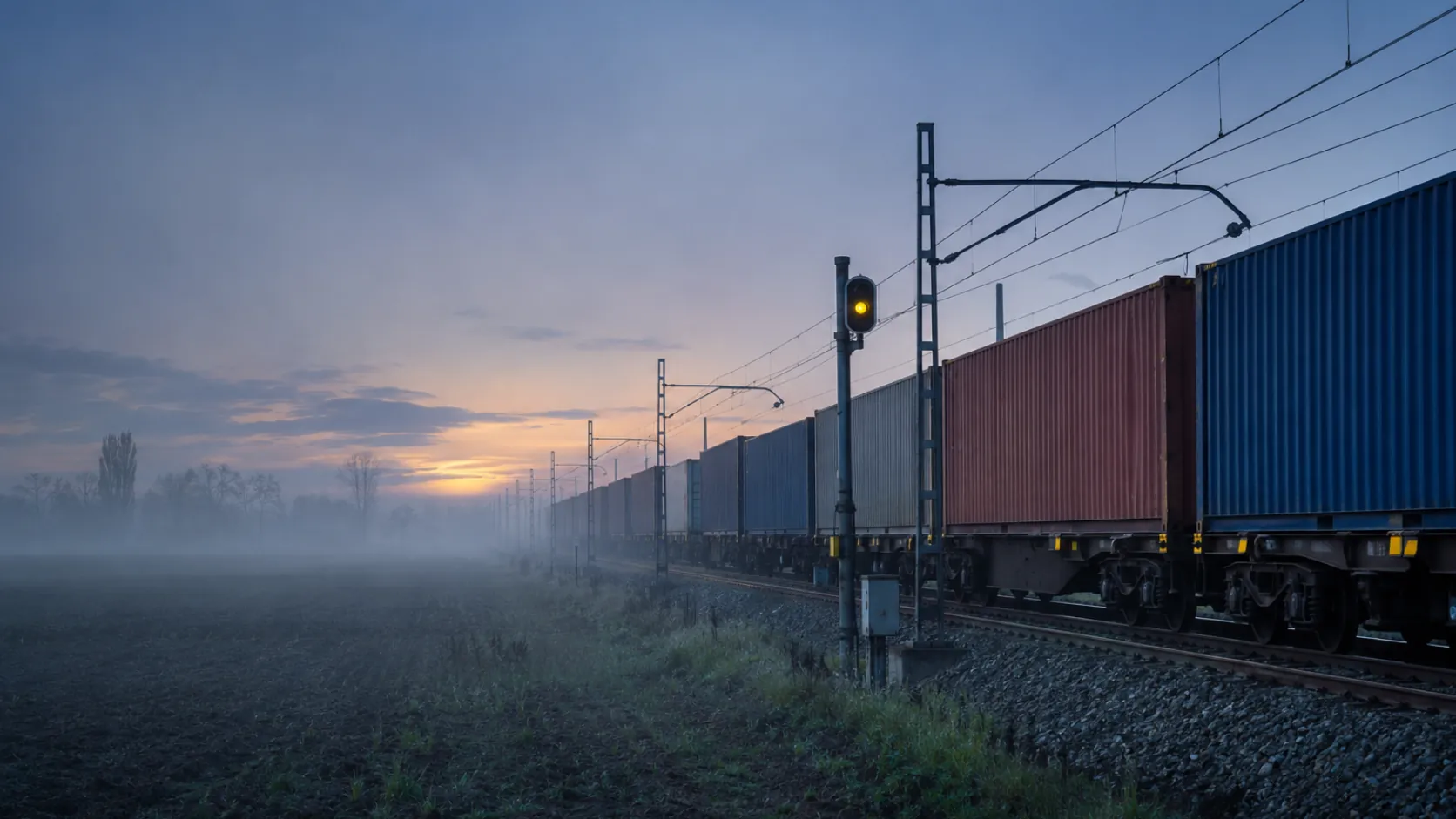
The European definition
Directive 92/106/EEC defines combined transport as transport between Member States in which the lorry, trailer, semi-trailer or loading unit uses the road for the initial or final leg and a non-road mode for the rest. In the original definition the non-road leg exceeds 100 km as the crow flies; the initial or final road leg goes as far as the nearest suitable railway station or, for sea or river ports, stays within 150 km as the crow flies of the port of loading or unloading. The Commission has proposed revising it several times: the text to consult is always the consolidated one on EUR-Lex.
Not to be confused with multimodal transport, which means a single contract covering several modes, or with intermodal in the strict sense, that is, moving the same loading unit without handling the goods.
How it works
- Road + rail. Containers, swap bodies or semi-trailers are taken to an intermodal terminal (interporto) and loaded on the train. On arrival another vehicle takes them to the delivery. See rail transport and intermodal terminal.
- Road + sea. Semi-trailers go on ro-ro ships, accompanied or not. See accompanied transport and ro-ro and combined road-sea transport.
- Road + inland waterways. Barges along rivers and canals, where the network allows.
The idea is to use each mode where it is most efficient: road for the flexibility of the first and last kilometres, rail and ship for long distances.
Why it is chosen
- Fewer kilometres on the road and therefore less traffic and fewer emissions per tonne carried.
- Relief. In Italy the traffic ban decree does not apply the holiday ban to vehicles in combined transport with a booking, in the cases provided for. At European level Directive 96/53/EC on weights and dimensions provides for combined transport a weight limit of up to 44 tonnes. See traffic bans and gross vehicle weight.
- An alternative to mountain passes and congested stretches.
- The goods are not touched during transhipment, with less risk of damage.
In some periods incentives are provided for those who shift goods away from the road: they must be checked with the Ministry of Infrastructure and Transport, because they change over time.
Limits and points of attention
- Terminals have opening hours and cut-offs to respect.
- Loading units must be suitable: craneable semi-trailers, compliance with the rail loading gauge.
- The logistics of the first and last kilometres are part of the project.
- Dangerous goods follow the rules of each mode: ADR by road, RID by rail, IMDG by ship.
Dalè assesses with you whether the combined solution is worthwhile for the route and the goods, and handles customs formalities in its own department in Brescia.
Common mistakes
- Thinking that combined means only rail.
- Forgetting height and gauge constraints.
- Not booking the place on the train or ship in advance.
- Confusing combined with multimodal, which is a type of contract.
Sources
A shipment to organise?
Tell us what you are shipping and where to: we reply with the route, the documents required and a quote.
Related Dalè services
Related glossary terms

