Combined road and sea transport. On wheels, by ship.
Trucks, semi-trailers and vehicles that drive on board: we combine road and sea on ro-ro vessels, arranging the sea leg with shipowners and partners.
The ship as an extension of the road.
What ro-ro is
Ro-ro stands for roll-on/roll-off: vessels onto which cargo is driven on and off on wheels, via ramps, without being lifted by cranes. On board travel trucks, semi-trailers, trailers, vehicles and self-propelled machinery, as well as loads on special platforms. In combined road and sea transport the truck covers the leg from collection to the port and from the port of arrival to delivery, while the ship replaces the sea part of the route, often the longest.
Accompanied or unaccompanied
There are two ways to ship a wheeled load. In accompanied transport the whole truck boards with its driver, who takes it back on arrival and continues to delivery. In unaccompanied transport only the semi-trailer travels: one tractor unit takes it to the port and another collects it at destination. Unaccompanied transport cuts driver and vehicle costs; accompanied transport simplifies the chain and may be preferable for delicate loads. We work out the solution with you according to the route and the goods.
Loading and securing on the semi-trailer
On the ship the semi-trailer is lashed to the deck, but the goods inside still feel the movements of the hull. That is why the load must be blocked and secured as for a long road journey, indeed with more care: straps, side boards, anti-slip materials and correct weight distribution over the axles. If the load leaves from our hub in Brescia we prepare it ourselves; if it leaves from your plant we tell you what to check before departure.
Motorways of the sea
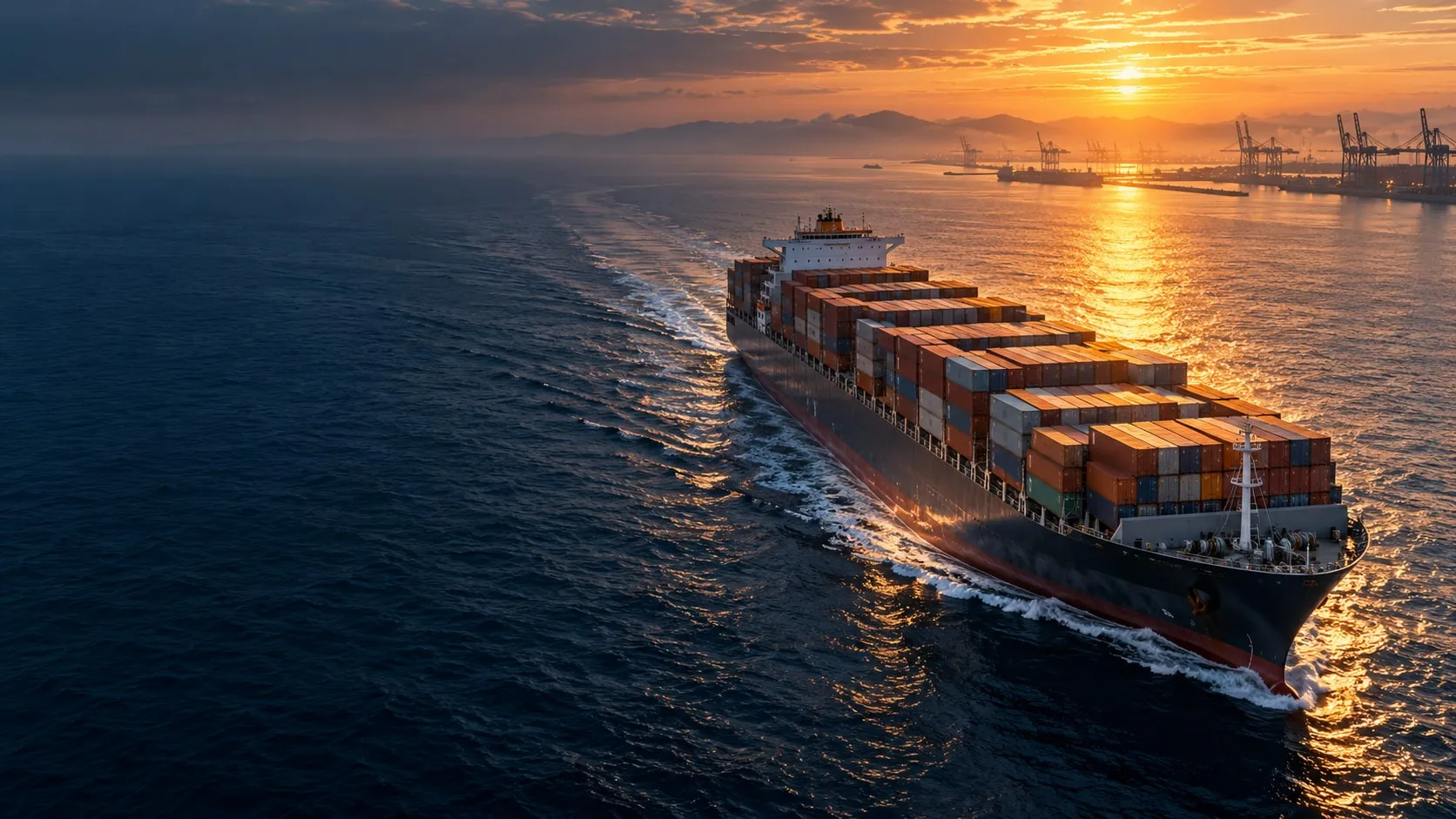
Motorways of the sea are short-sea shipping links that offer an alternative to all-road transport, supported by European transport policy. Routes between Italian ports and other Mediterranean ports, to the islands, Greece, the Balkans or North Africa, are a typical example. For many destinations the ship avoids long road journeys and complex crossings, and reduces the kilometres driven by the truck.
How freight is calculated
On ro-ro vessels space on board is measured mainly in lane metres of deck occupied, as well as the weight and height of the vehicle. A standard semi-trailer, a truck and trailer and an oversized vehicle therefore have different rates, and abnormal loads need precise data on length, width, height and weight. You tell us what needs to travel and we check availability and conditions on the chosen route with shipowners and partners.
Vehicles, machines and self-propelled equipment
Ro-ro also suits vehicles and machines that move under their own power or on platforms: cars, commercial vehicles, agricultural and construction machinery. For a classic car or a valuable vehicle a dedicated container remains the most protected option, while ro-ro is simpler on the routes served: we decide together based on value and destination. Before loading you need the vehicle documents and, for countries outside the European Union, customs formalities.
Dangerous goods on board
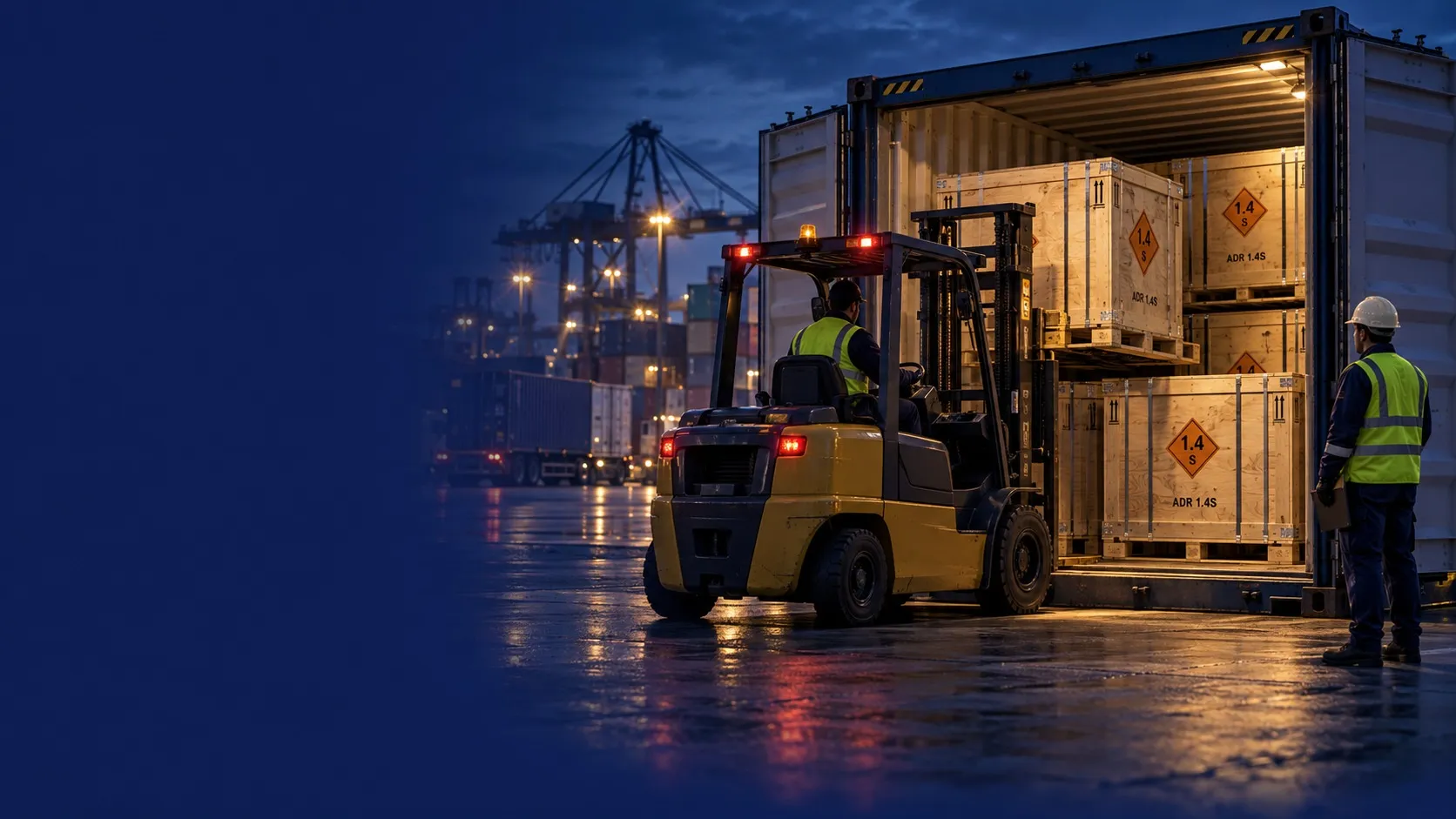
Wheeled loads carrying dangerous goods can also travel by sea, but on board the IMDG Code and the conditions of the individual line apply, and the line may restrict the classes and quantities accepted; on ships that also carry passengers the restrictions may be tighter. Before booking we check classification, documents and acceptance, and we organise the road leg under ADR. The rules for each mode are explained on our dangerous goods pages.
Customs and documents
For destinations outside the European Union the goods must be declared for export before loading, and trucks continuing by road may also need a transit document. We handle export at our in-house customs as an Authorised Economic Operator and prepare the travel documents, so the vehicle reaches the port with everything in order. On routes within the European Union, by contrast, export customs formalities are normally not required.
When it pays
Combined road and sea transport pays when the route is served by regular sailings, when the load is already on a semi-trailer or on wheels, and when the land route would be long or complicated. For packages or pallets bound for distant destinations, a full container or groupage remains more suitable. Starting from the goods, the destination and the timing, we tell you which combination makes most sense, without quoting crossing times that depend on the shipowner, the season and sea conditions.