Rail freight shipping
Rail combines large volumes with long distances. We arrange it through selected rail partners, with collection, delivery and customs managed from Brescia.
Rail, when it is the right choice.
Why choose rail
Rail freight sits between sea and air: on long continental routes it is often faster than sea and costs less than air, with capacity suited to substantial volumes. It is not the answer for every shipment, but for regular flows, heavy goods or links between Europe and Asia it can offer a good balance of cost, time and reliability. Dalè arranges rail shipments through selected rail partners and intermodal operators: we coordinate collection, documents, customs and delivery, so you have a single point of contact even when the goods change mode.
Road-rail intermodal transport in Europe
In intermodal transport the goods travel in a loading unit, that is a container, a swap body or a semi-trailer designed for transhipment, which is not opened during the journey. A lorry takes it from the sender to the rail terminal, the train covers the main leg and another lorry makes the final delivery. It is common on the major European corridors, for example between Northern Italy and Northern Europe, and works well for steady flows of full loads. We assess with you whether the route, volumes and type of goods make the combination worthwhile compared with road-only transport, and we work with partners operating on that route.
Containers and swap bodies
Two loading units are most common on rail. The container, in the standard 20 and 40-foot sizes, is sturdy and stackable and can move from ship to train to lorry without opening the doors: it is the standard on links with Asia. The swap body, by contrast, is designed for European land transport: it is detached from the lorry, travels on a rail wagon and, unlike a container, is not normally stackable; in return its internal dimensions are closer to those of a semi-trailer, convenient for Euro pallets. The choice depends on the route, the goods and the units available from the partners on that line.
Rail links between Europe and China
In recent years regular rail links have developed between China and Europe, crossing Central Asia and connecting Chinese terminals with European ones. For many goods they are a middle way between sea containers and air freight. Shipments are mostly full containers, and some operators also offer groupage services. Available routes, capacity and permitted goods, however, depend on the international situation and on the sanctions in force in the countries crossed: before every proposal we check with our partners that the route is feasible and the goods are accepted. For China we always compare the sea and air alternatives as well.
The advantages of rail
A single train carries large quantities of goods and, on long-distance routes, is less affected by road traffic. Rail freight is generally regarded as a mode with lower emissions per tonne carried than road and air, an increasingly relevant factor in companies' sustainability reporting. On intercontinental routes it helps keep costs down compared with air, and the closed loading unit reduces handling of the goods along the way. Finally, for companies with recurring shipments, rail can become a steady part of planning alongside road and sea.
The limits to bear in mind
Trains do not stop at your warehouse door: a road collection and delivery are almost always needed, with the related handling costs at the terminals. Departures follow the timetables set by operators, and capacity can be limited in periods of high demand. On long-distance links the goods cross networks with different track gauges, and at the border the loading units have to be transferred to other wagons, with possible waiting times. Weights and dimensions must comply with the limits of the wagons and lines. For small, urgent or short-distance shipments, road or air are often better suited, and we will tell you so frankly.
Rail transport documents
International rail freight has its own rules. In countries that are party to COTIF, the Convention concerning International Carriage by Rail, the contract is governed by the CIM Uniform Rules, which form its Appendix B, and the goods travel with a CIM consignment note. Many countries in Eastern Europe and Asia apply instead the SMGS agreement on international goods transport by rail, with its own consignment note. For links between the two systems there is a common CIM/SMGS consignment note, developed by CIT and OSJD, which avoids reissuing the transport document when moving from one regime to the other. These are supplemented by commercial and customs documents: invoice, packing list, export and transit declarations.
Dangerous goods: RID
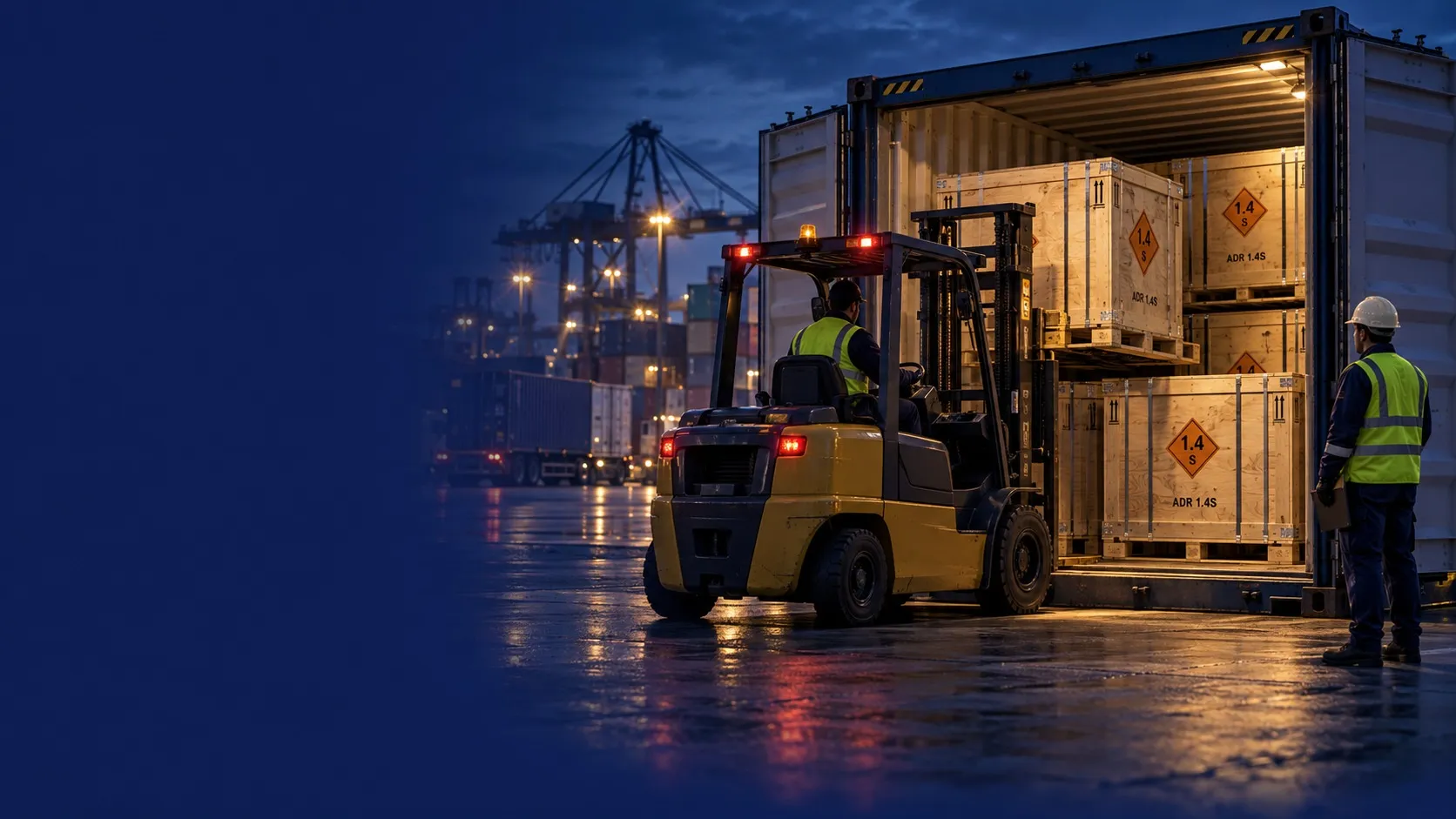
Dangerous goods by rail are governed by RID, the regulation concerning the international carriage of dangerous goods by rail, which forms Appendix C to COTIF. RID is harmonised with ADR for road: classes, UN numbers, approved packaging, labels and documents are largely the same, and both are updated periodically. In intermodal transport this makes things simpler, but each leg must comply with the rules of its own mode: ADR on the lorry, RID on the train. On links with SMGS countries the rules of that agreement apply. Not every rail service accepts every hazard class: we check acceptance with the partner before confirming the shipment.
Customs and transit
When goods leave the European Union by rail, an export declaration and, as a rule, a transit procedure are required. For imports from China or other non-EU countries, the goods are cleared at the arrival terminal or continue in transit to a customs office closer to the consignee. As an AEO operator we handle formalities with authorised simplified customs procedures and coordinate documents with our rail partners, so that the data on the invoice, packing list and consignment note match: this is the key to avoiding hold-ups at the border.
How we organise a rail shipment
It all starts with your enquiry: origin and destination, type of goods, weights and volumes, any dangerous goods and the shipping period. With our partners we check the feasibility of the route and the most suitable loading unit, and we send you a clear quote, compared where useful with road, sea or air alternatives. Once confirmed, we coordinate collection, any consolidation of the goods at our logistics hub in Brescia, transport and customs documents and final delivery, with updates on the status of the shipment along the way.