What it is and how it works
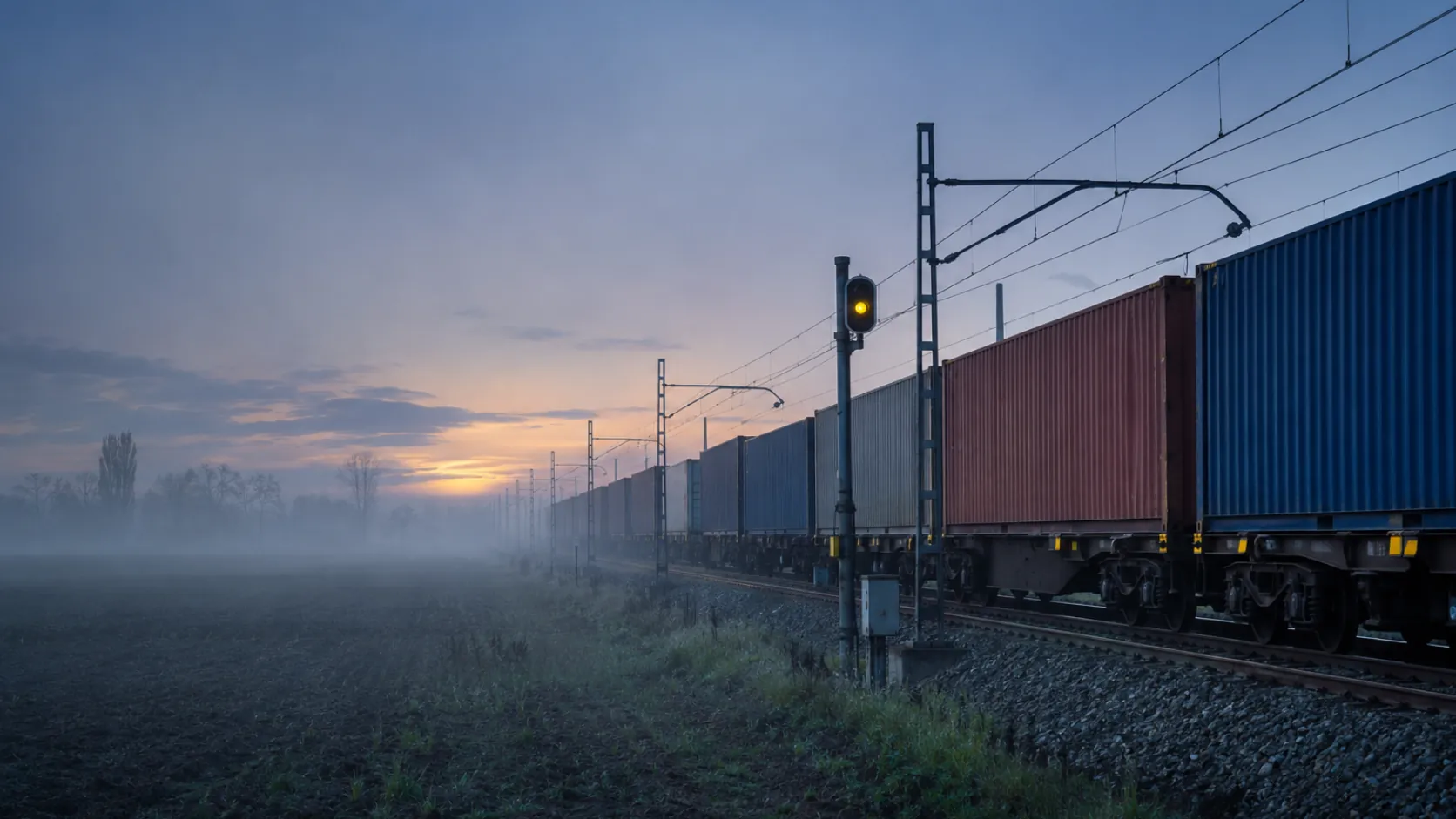
Rail links between China and Europe began as an alternative to sea and air for containerised goods. The container is loaded at a Chinese terminal and handed to a rail operator, which runs it across several national rail networks to a European terminal. The loading unit is the same for the whole journey: the wagon and the locomotive change, not the container. Dalè organises these shipments (see rail freight), checking case by case whether the route is workable.
Routes and gauge change
The link crosses several networks, with different rules. China and Western Europe use the standard gauge of 1,435 mm, while the countries of the former Soviet Union use a wider gauge of 1,520 mm. For this reason you need transhipment or bogie-change points, usually at the border between China and Kazakhstan (for example Dostyk/Alashankou and Khorgos) and at the border between Belarus and Poland (Brest and Małaszewicze). At these points containers are moved from one wagon to another or the wagons change their axles: these operations are planned, but they can create queues at times of heavier traffic.
There are several routes. The northern corridor runs through Kazakhstan, Russia and Belarus; the so-called Middle Corridor crosses Kazakhstan, the Caspian Sea, the Caucasus and Turkey or the Balkan countries, partly with sea legs. The choice depends on the political situation, available capacity and the type of goods.
Sanctions, controls and checks
Since 2022 European Union sanctions against Russia and Belarus have affected rail transit: some goods cannot cross or be exported to certain territories, and the restrictions change over time. For this reason, before booking, you check the origin, the commodity code of the goods and the itinerary. For Russia the main legal basis is in Regulation (EU) No 833/2014 and its amendments; for Belarus, Regulation (EC) No 765/2006 applies, also amended several times. There is no rule valid forever: the check must be repeated for every shipment and is best done with the customs department.
At the border of the Union the goods arrive with rail transport documents and must be placed under a customs procedure. In Italy customs clearance takes place at a customs office or at an authorised terminal, with a declaration, the ICS2 security declaration where required, and payment of duties and import VAT.
Which goods are worth sending
- Goods of medium to high value, which cannot withstand the long transit times of sea freight but do not justify air freight: components, household appliances, clothing, spare parts, light machinery.
- Full container loads of 20 or 40 feet, with groupage possible only on some services.
- Goods to be planned regularly, to keep stock without tying up too much capital.
Less suitable are very bulky low-value goods, which sea freight carries more cheaply, and goods subject to transit restrictions. Dangerous goods follow RID and not all services accept them.
Comparison with sea and air
Sea remains the solution for large volumes and goods that are not urgent: see FCL and LCL. Air serves urgency and high-value products. Rail occupies the middle ground and is also an answer when a sea route has problems. It is, however, more exposed than other modes to geopolitical events, border closures and changes in capacity. Before deciding, it is worth comparing the total door-to-door cost, including collection in China, terminals, customs and final delivery.
Common mistakes
- Booking without checking origin, customs code and itinerary against the sanctions in force.
- Assuming the route stays the same: capacity, borders and restrictions change over time.
- Underestimating the transhipment and gauge-change points, which can lengthen transit times in periods of heavier traffic.
- Sending dangerous goods or very bulky low-value goods by train without checking that the service accepts them.
Sources
A shipment to organise?
Tell us what you are shipping and where to: we reply with the route, the documents required and a quote.
Related Dalè services
Related glossary terms

