Sea groupage to Malaysia. Less than a container, the same service.
For Malaysia we ship by sea groupage goods that do not fill a container: we consolidate them with other consignments and you pay for the space they take up. Ports served: Port Klang, Penang and Pasir Gudang.
Answers to the most common questions.
Which Malaysian ports do you serve with groupage?
Port Klang for Kuala Lumpur, Penang for the north and Pasir Gudang for Johor. For Sabah and Sarawak the goods continue with a second sailing.
Is halal certification needed to export to Malaysia?
It is not a general customs requirement, but for food and consumer products the market often asks for it. Check with the importer before shipping.
What is the difference between groupage and a full container?
With groupage you pay only for the space taken up in a shared container; with a full container the whole box is yours. Above a certain volume the full container becomes cheaper.
What should you know before shipping groupage to Malaysia?
How sea groupage works
In groupage, or LCL, your goods are loaded into a container with those of other shippers bound for the same port. The cost is calculated on volume in cubic metres or on weight, whichever counts more. We collect the goods, check them at the Brescia hub and prepare the export customs declaration in our in-house department.
The ports of the peninsula
Port Klang is the port of Kuala Lumpur and the country's main one; Penang serves the north and its electronics district; Pasir Gudang the Johor area, on the border with Singapore. For Malaysian Borneo, Sabah and Sarawak, the journey continues with a second sailing: this must be planned from the quote stage.
Food, cosmetics and halal certification
Malaysia is a Muslim-majority country. For food and other consumer products the market often asks for halal certification, issued by bodies recognised by the Malaysian authorities. It is not a customs document, but without it the product may not find distribution. It is worth clarifying with the importer before shipping.
Packing for a long journey
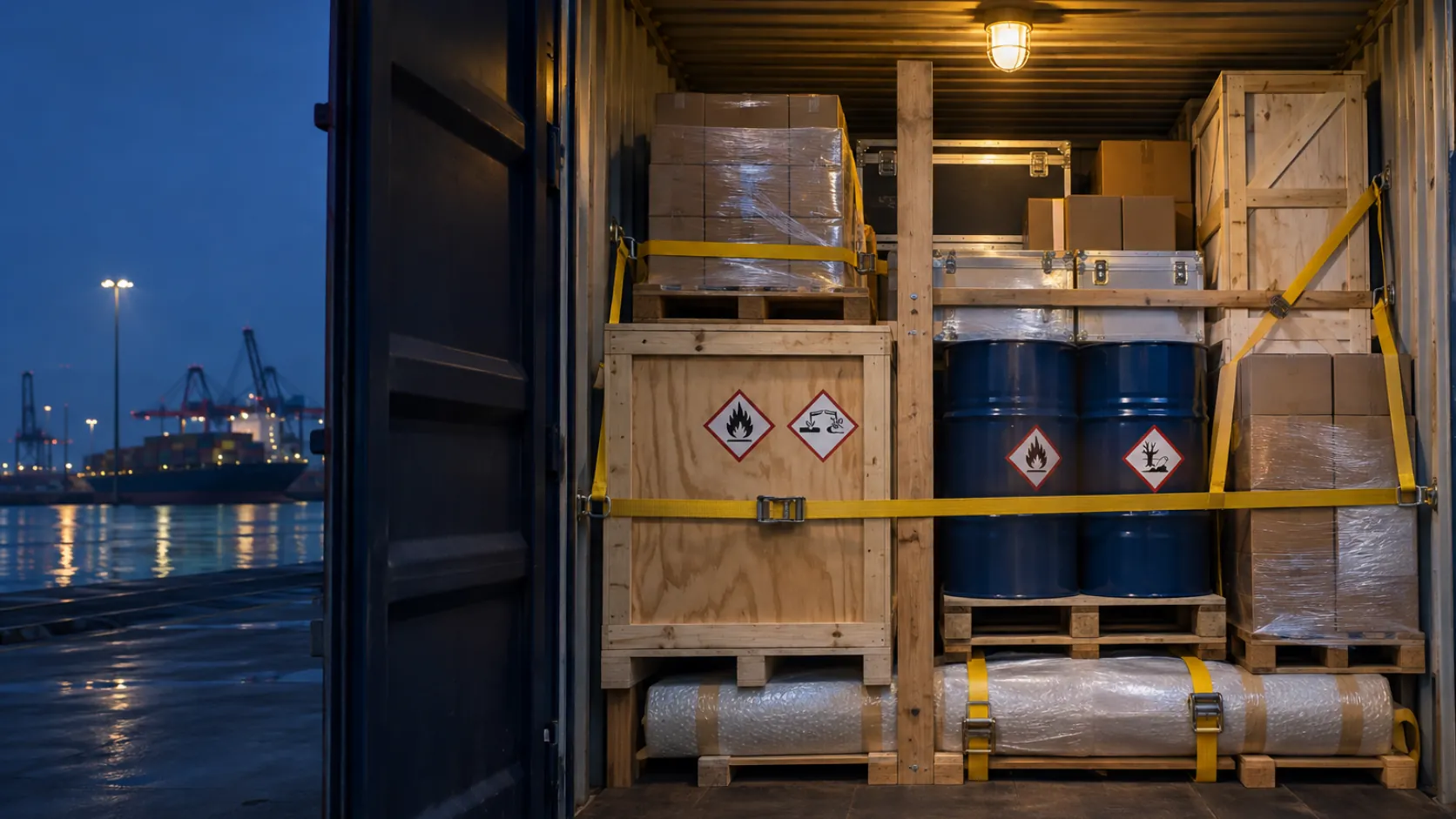
In a shared container the goods are handled several times and spend a long stretch at sea. Sturdy packages, sound pallets and moisture protection are needed. Wooden packaging must be treated and marked to the ISPM 15 standard: a non-compliant pallet can hold up the shipment on arrival.