What it is
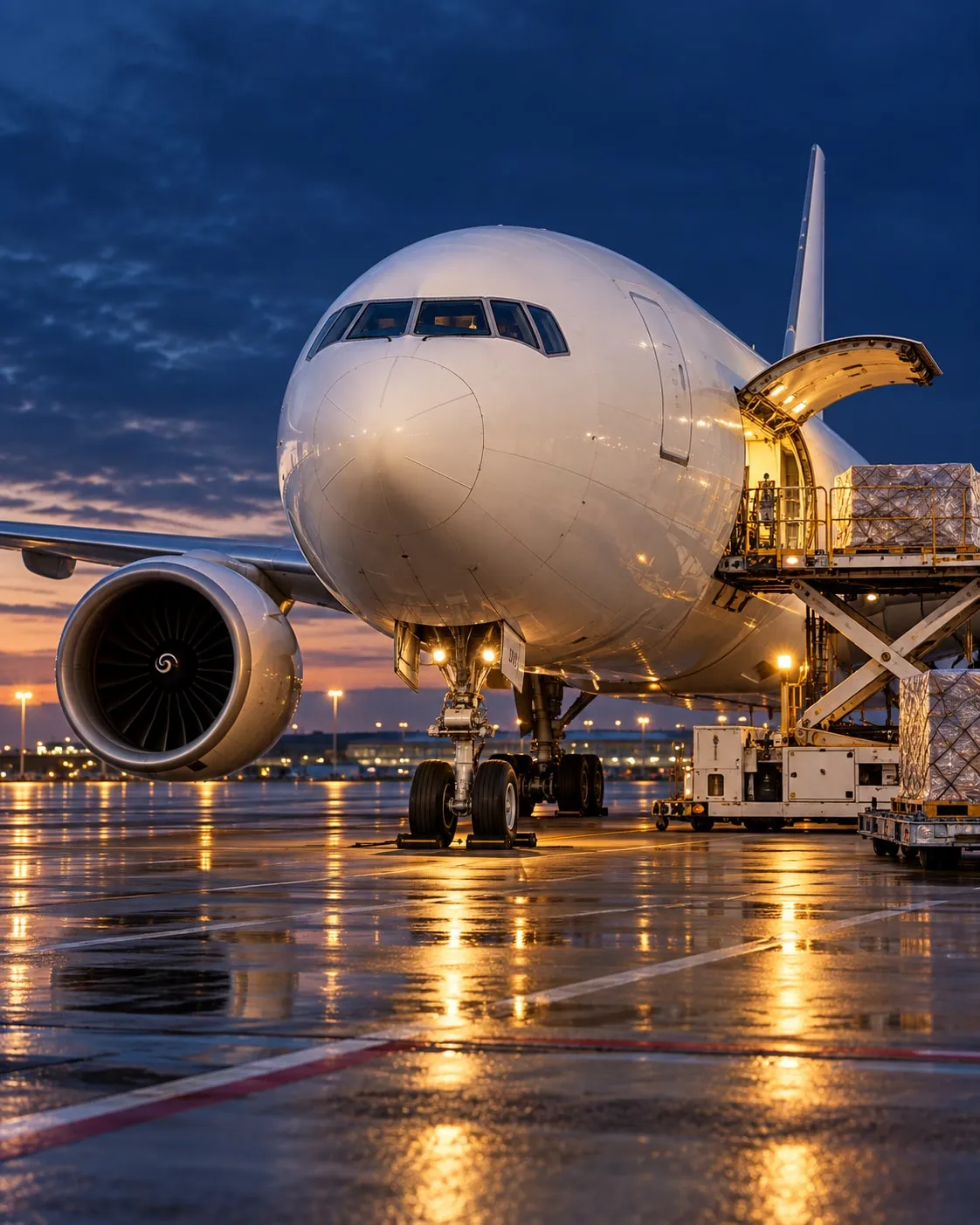
The air pallet is a flat-type unit load device (ULD): a plate with fastening edges, on which goods are stacked, covered with a net and secured with straps. It is not the wooden or plastic warehouse pallet, that is the EPAL or industrial pallet, but an approved aviation device, with maximum weight and shape defined by the aircraft type and position.
The code identifies type and dimensions. The two most common are:
- PMC: 96 × 125 inch base, about 244 × 318 cm; used on the main deck of freighters and on many wide-body aircraft.
- PAG: 88 × 125 inch base, about 224 × 318 cm; it is the narrower version, also used on the main deck and in some lower deck configurations.
There are many other platforms, of different sizes, but these two are the ones normally used for reference. The exact values for dimensions and permitted weight are defined by the IATA rules on ULDs and vary with aircraft model and airline.
Contour and height
The goods cannot exceed the contour of the position in which the pallet is loaded: a profile that follows the cross-section of the aircraft. For this reason the same pallet can have one maximum height on the main deck and another, much lower, on the lower deck; see main deck and lower deck. The maximum permitted weight depends on the aircraft and the position, and is given by the airline.
Who builds up the pallet
The pallet is built up (build-up) by the airport handler or the consolidator, not by the customer. The shipper delivers packages or wooden pallets that must be compatible with build-up: regular shape, distributed weight, sturdy packaging. The work includes checking dimensions, protecting the goods and balancing the weight; see airport handling.
In air consolidation several shipments from different customers are built up on the same pallet; in this case the pallet is recorded under a master air waybill, and the individual shipments have their own.
A practical example
A company from Brescia ships four crates of machinery to the Middle East, each with significant bulk and weight. If the crates are tall, they are built up on a PMC and loaded on the main deck of a cargo aircraft. If they were low and light, they could travel on contoured pallets in the lower deck of a scheduled aircraft. The chargeable weight is derived from the shipment, not from the pallet: see chargeable weight.
Common mistakes
- Confusing the air pallet with the wooden pallet on which the goods arrive from the manufacturer.
- Thinking that the permitted height is the same for all flights.
- Shipping irregular or non-stackable packages, which make build-up inefficient.
- Not stating the actual weight of individual packages, which is needed for balancing.
For the difference between pallets on aircraft and pallets on trucks, see also pallets on trucks.
Sources
A shipment to organise?
Tell us what you are shipping and where to: we reply with the route, the documents required and a quote.
Related Dalè services
Related glossary terms

