What they are
A scheduled aircraft has two levels in cross-section. Above the passenger floor is the main deck; below is the lower deck, divided into forward and aft compartments and sometimes a bulk compartment. A freighter can load goods on both: on the main deck even very tall and bulky pieces, on the lower deck smaller packages.
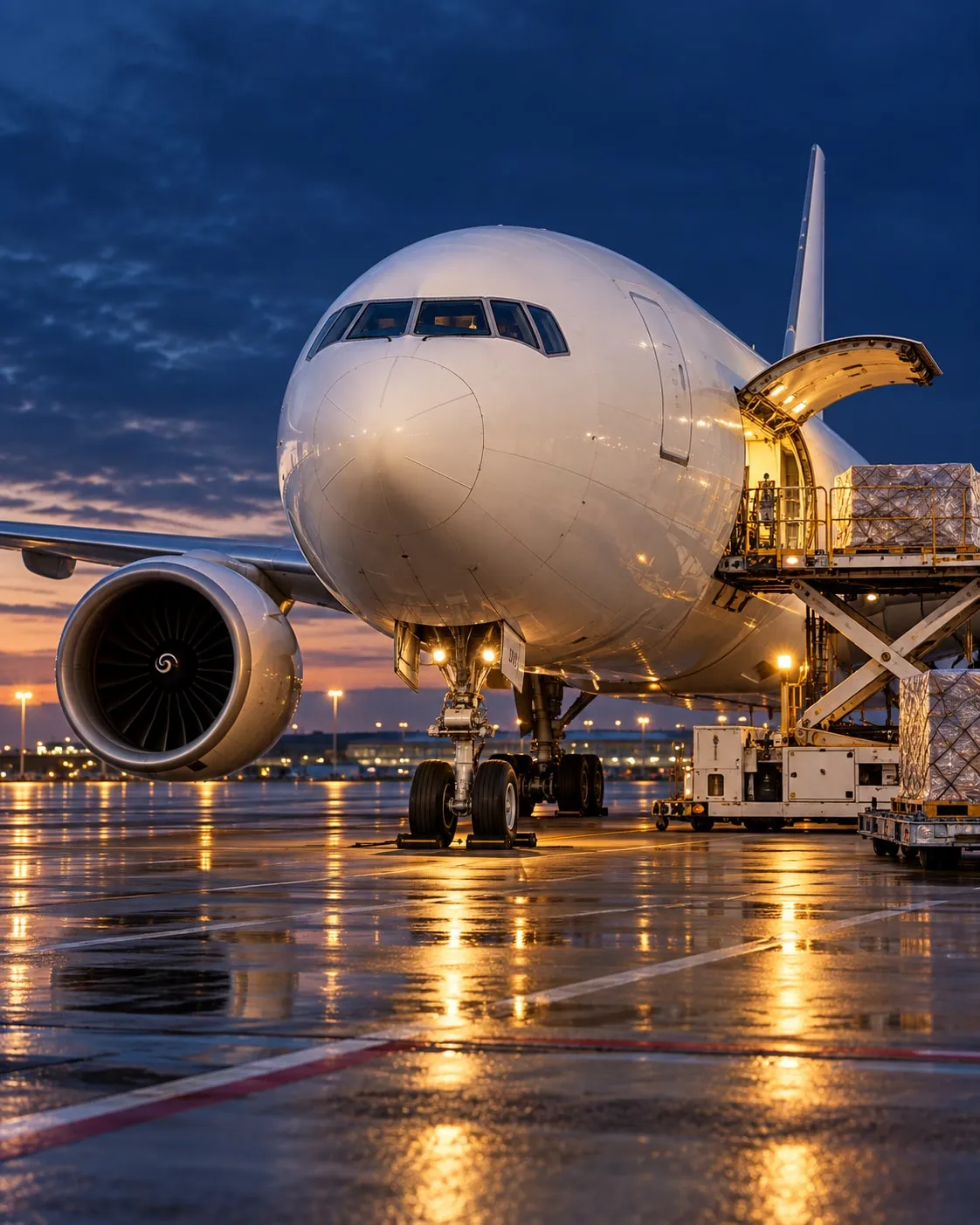
On passenger flights the main deck is occupied by seats, so freight travels in the lower deck, as belly cargo. There are, however, freighter versions converted from passenger aircraft, with the main deck cleared and a side or nose door.
Practical differences
- Height. The main deck allows taller pallets; the lower deck has a contoured cross-section that limits height and width, and requires loading units with a suitable profile (see ULD and air pallet).
- Access. The main deck has large doors, often with a ramp or opening nose on freighters; the lower deck is reached through smaller doors.
- Type of load. Dangerous goods, animals, loose items or very heavy pieces have different positioning rules, which can limit the use of a deck.
- Availability. The lower deck is on all scheduled aircraft; the cargo main deck only on dedicated or converted aircraft.
Why dimensions matter
The permitted heights vary by aircraft type and loading position, and airlines state them in their technical sheets. As a rule, a tall package cannot fly in a lower deck and must be redirected to a cargo aircraft. Even small differences matter: a piece a few centimetres over the limit can change the whole shipment, from the type of flight to the available routes.
For this reason, when quoting, we always ask for the three dimensions of the packed package (not those of the product), the weight and, for oversize goods, a drawing. The chargeable weight in air freight uses the greater of actual and volumetric weight, as explained in chargeable weight.
A practical example
A plant engineering company from Brescia has to ship a pump in a wooden crate, more than one and a half metres high, to a customer in the Middle East. In the lower deck of a passenger aircraft the crate might not fit, and would risk being refused anyway. A cargo flight is therefore booked, with the piece loaded on the main deck, on a pallet with net and straps. If the crate were lower, a scheduled flight with a suitable lower deck would be possible.
Common mistakes
- Giving the dimensions of the product and not those of the packed package with its pallet.
- Assuming that a height accepted on one flight applies to all.
- Waiting until the last day to report an oversize piece.
For loads that do not even fit on the main deck, see charter and the page on abnormal loads.
Sources
A shipment to organise?
Tell us what you are shipping and where to: we reply with the route, the documents required and a quote.
Related Dalè services
Related glossary terms

