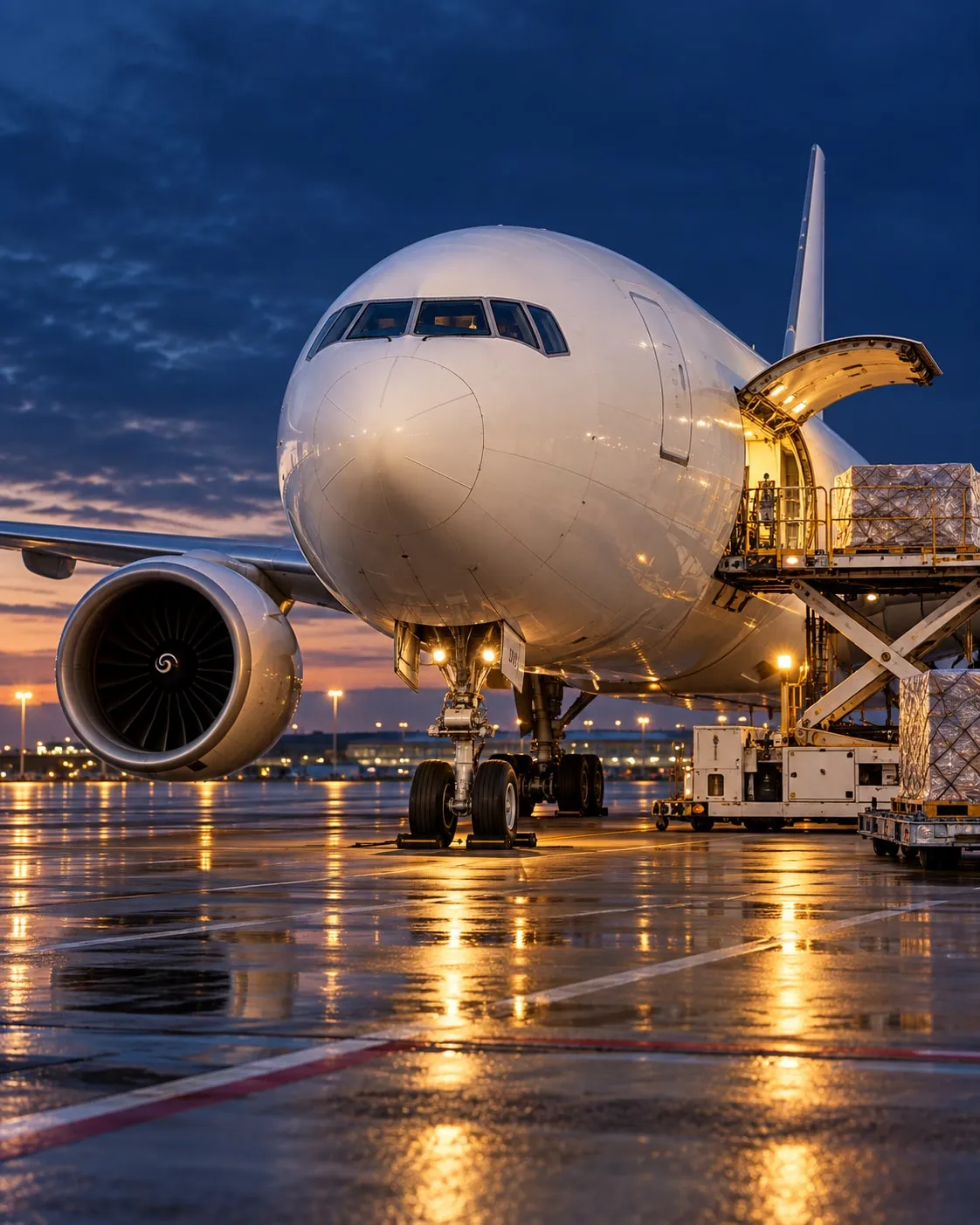
What a cargo charter flight is
A scheduled flight leaves according to a published timetable and carries goods from many customers. A charter is the opposite: you hire the aircraft, or a defined space on a flight chartered by several customers, and you decide with the carrier where and when to fly. The contract is a freight charter contract and the aircraft is almost always a cargo aircraft with a nose or side door for the bulkiest loads.
There are two forms: the full charter, in which a single customer fills the aircraft, and dedicated space on a shared charter, where several shipments split the capacity. The second option lowers the commitment when the load is not enough to fill an aircraft.
When you really need it
- Goods not allowed on scheduled flights. The IATA dangerous goods rules exclude some items from passenger flights, including several in class 1. Some can travel only on cargo aircraft, others only with an exemption issued by the civil aviation authority (in Italy, ENAC).
- Oversize or very heavy loads. A piece that does not fit in the hold or on standard pallets can be loaded only on an aircraft with a suitable cargo door.
- Emergencies. When a plant shutdown costs more than the flight, you choose the departure that suits the customer, not the one in the scheduled timetable.
How it is organised
The first step is the feasibility check: you need the weight, dimensions and nature of the goods, the departure and arrival airports and the requested date. From there the aircraft type is chosen, the maximum dimensions accepted by the door and the loading deck are checked (see main deck and lower deck) and the carrier is asked for an offer.
Then come the permits. A charter does not have the ready-made network of authorisations of a regular flight: you may need overflight permits for the countries crossed, landing authorisation, airport slots and, for dangerous or military goods, the exemptions or clearances required. The carrier or its agent applies for them with the authorities; the freight forwarder coordinates the cargo documents, the air waybill and the export papers, so that nothing is missing at departure.
Finally, ground logistics: transfer to the airport, escort if needed, ramp assistance and loading. Dalè works with this sequence for loads in the firearms sector and for oversize shipments, and describes it on the page about charter flights.
A practical example
A company in Lombardy has to deliver a dismantled assembly line, in long and heavy parts, to a plant on another continent by a date tied to the start-up of the facility. On a scheduled flight some pieces would not fit through the hold door. A full charter on a cargo aircraft with a nose door is therefore considered, departing from a nearby airport and arriving at the airport closest to the site.
Charter, scheduled flight and urgent goods
A charter is not the fastest way to handle every emergency. A normal package can travel on the next flight out on a scheduled service without hiring an aircraft. A charter makes sense when the nature of the load, or its size, rules out a scheduled flight, or when the quantity justifies a dedicated aircraft.
Common mistakes
- Asking for a charter without exact weight and dimensions: the carrier cannot propose the right aircraft.
- Underestimating permits, which are the least predictable part.
- Forgetting customs at departure and arrival: the aircraft may be ready, but the goods must have their declarations in order.
Sources
A shipment to organise?
Tell us what you are shipping and where to: we reply with the route, the documents required and a quote.
Related Dalè services
Related glossary terms

