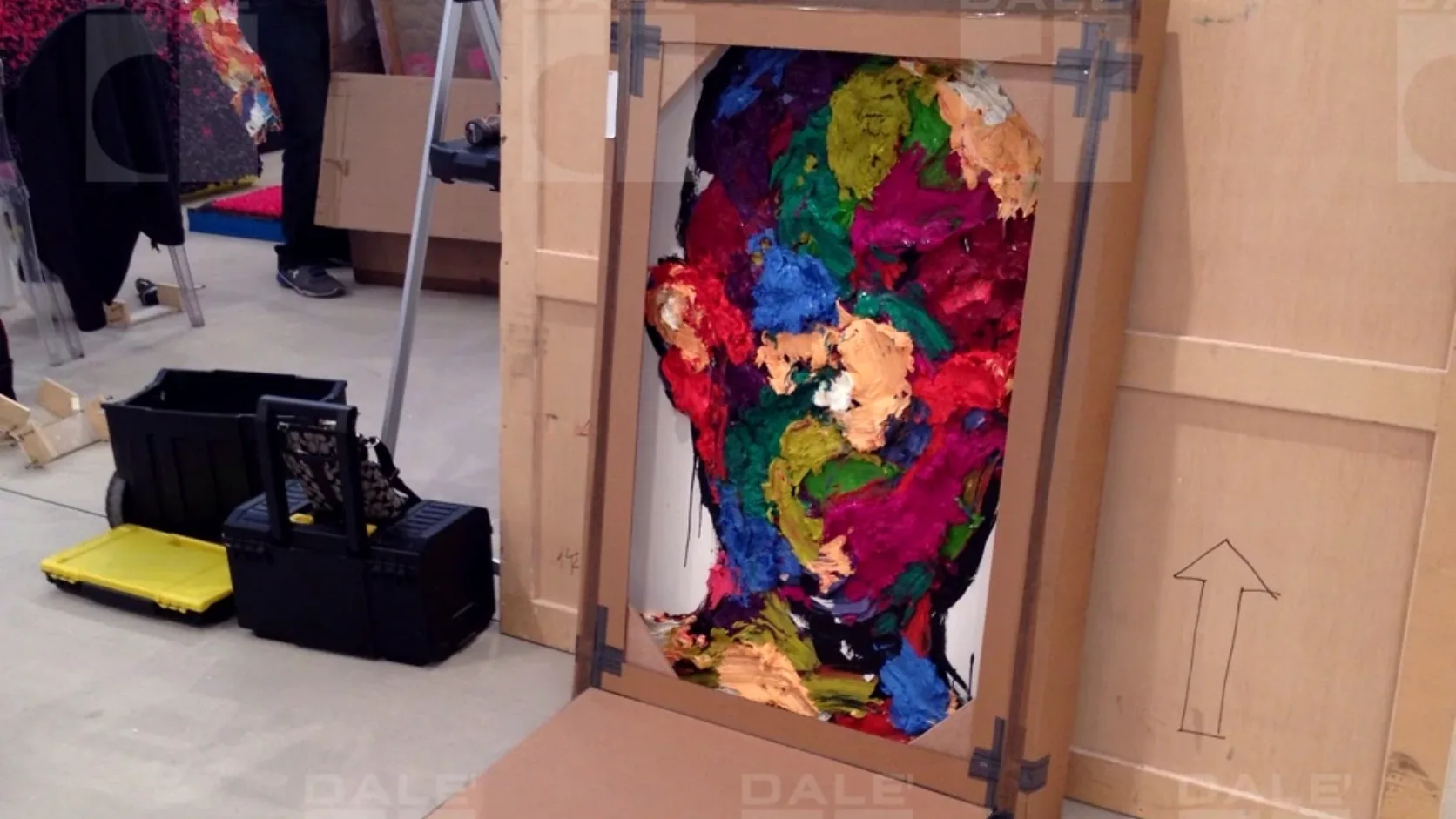
What it is
The term comes from maritime language and means what is put "between" and "under" the cargo, not the cargo itself. During transport the goods experience acceleration, braking, shocks and swaying. If voids are left in the cargo space, a package can slide, tip over or crush the others. Dunnage fills those voids and transmits the forces to the structure of the vehicle. It does not replace lashing with straps and chains, but complements it. For the whole range of fastening systems, see also load securing.
The most common materials
- Timber: joists, boards, wedges, battens. They create supports, lift the goods off the floor and block horizontally. If intended for abroad, it must be treated according to the ISPM 15 standard.
- Cardboard and honeycomb: panels and corner pieces to separate layers and fill voids of limited weight.
- Air cushions (dunnage air bags): inflated between rows of packages to fill the void, see dunnage air bags.
- Anti-slip mats: increase friction between goods and floor.
- Nets and sheets: hold together light packages or sacks.
- Panels and bulkheads: to divide zones or protect a wall.
- Foams and plastic wedges: reusable, useful where timber is a problem.
Good practice principles
The international reference for loading and securing goods in vehicles is the IMO/ILO/UNECE Code of Practice for Packing of Cargo Transport Units, the CTU Code. It is not mandatory in itself, but it collects the good-practice rules that carriers and insurers expect. The basic guidance:
- distribute the weight evenly, with the centre of gravity low and centred;
- avoid voids, and where they cannot be avoided, fill them;
- block the goods in the directions of travel, and not only sideways;
- do not put heavy packages on light ones;
- protect the container's walls and doors from contact with the cargo;
- check that the dunnage can withstand the force it has to hold back.
In the container and the lorry
In a container the goods leave from a port and travel for weeks, with rough seas and several handling operations: this is where blocking matters most. For a load of pallets in a container, attention goes to the voids between rows and between the cargo and the doors. In a lorry, braking and bends count; for loose packages, bars, straps and dunnage are used. For a general overview see stowage and stuffing and stripping.
Common mistakes
- Leaving large voids because "it is all heavy anyway".
- Using untreated timber for an export subject to ISPM 15: the goods may be stopped or destroyed on arrival.
- Blocking only one side, ignoring braking forces.
- Resting the dunnage on a weak point of the floor or walls.
- Not photographing the load before closing the container: if damage occurs, there is no proof of how it was loaded.
When you need our support
In our warehouse in Brescia we prepare industrial packing, wooden crates and loads ready for export. For shipments by container, lorry or groupage, it helps to tell us the weight, dimensions and fragility of the packages: with these data the type of blocking is chosen. For containers see also the container guide and the ISPM 15 guide.
Sources
A shipment to organise?
Tell us what you are shipping and where to: we reply with the route, the documents required and a quote.
Related Dalè services
Related glossary terms

