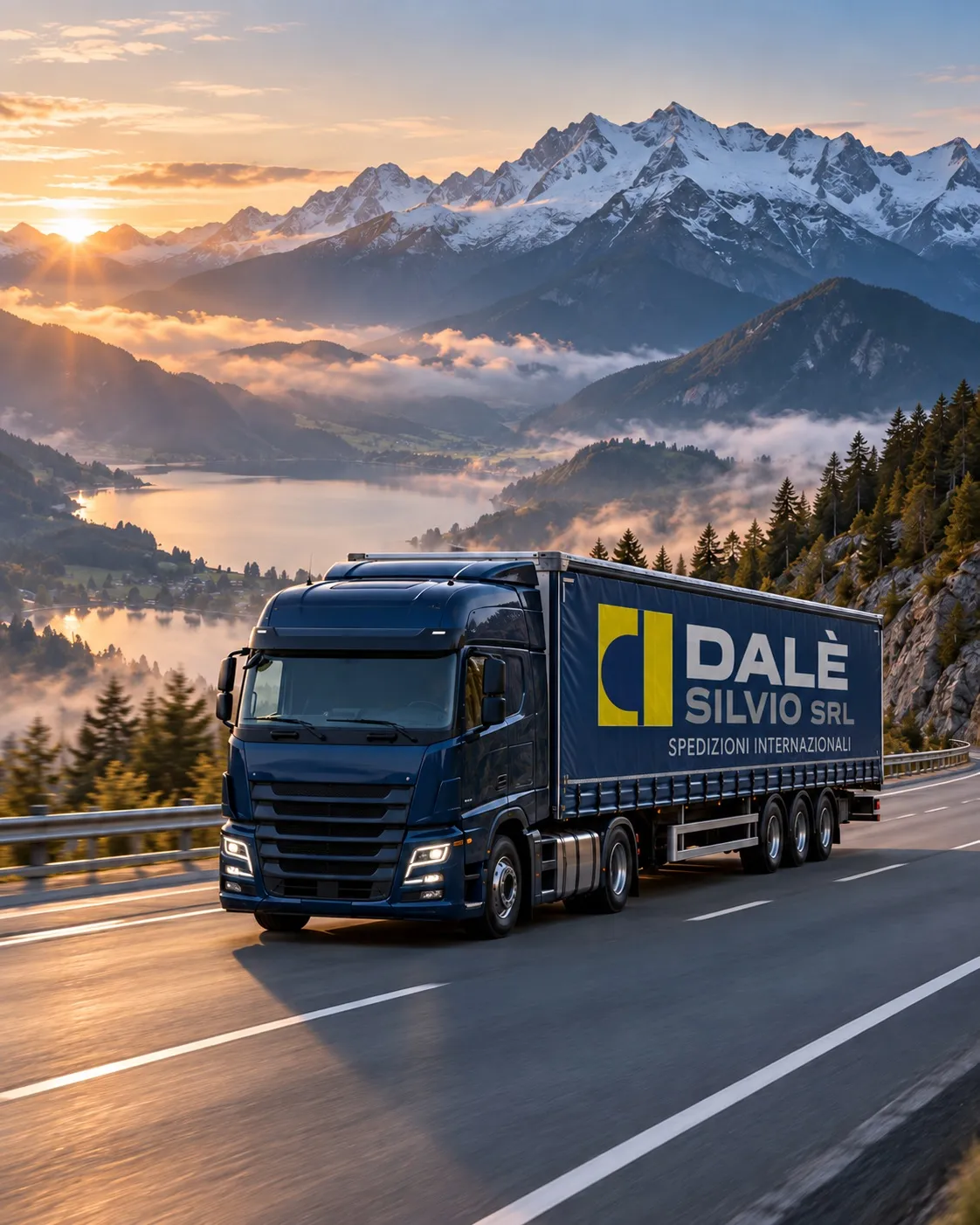
What a centinato is
The name comes from the "centina", the frame that holds the curtain. On modern models the curtain slides along the side: instead of unhooking every strap, the operator pulls it aside and frees the whole length of the floor. There are two main versions: the classic centinato, with fixed posts supporting the curtain, and the tautliner, or "sliding curtain", where the posts move together with the curtain. Some models also have an opening roof.
The structure protects the goods from rain and dust, but it is not watertight like a box van: the curtain is a shelter, not a container. For goods that are very sensitive to damp or theft, a box-bodied vehicle is needed.
Why it is the most used
- Loading from several sides: from behind with the pallet truck, from the side with the forklift, from above with a crane or overhead crane, when the roof opens.
- Versatility: pallets, boxes, sacks, tubes, sections, machinery that is not too tall.
- Availability: because it is so widespread, finding a curtainsider on a European route is easier than finding a specialised vehicle.
- Short loading times: the side opening reduces manoeuvres at the dock.
Limits to know
The load floor of a curtainsider semi-trailer is about 13.6 metres long (an indicative figure, to be checked on the vehicle assigned) and the usable internal height is below the 4 metres maximum allowed by Article 61 of the Italian Highway Code, because part of it is taken up by the floor and the structure. If your load is tall, give the exact height of the package when you make your request, otherwise the vehicle will not be enough. The curtain, moreover, does not protect against theft like a closed body and does not insulate against heat or cold: for perishable goods temperature-controlled vehicles must be used.
On transport to non-EU countries, pallets and wooden packing must also bear the ISPM 15 mark.
Typical goods
For an area like Brescia the most frequent loads on a curtainsider are: steel sections and tubes, pallets of mechanical components, plastics in sacks, building materials, panels and industrial packaging. For very long packages, loading from above or from the side can be useful; for very heavy, concentrated loads a flatbed with sideboards is better, as it bears the support points more effectively.
A practical example
A company in Gussago ships twenty-two pallets of boxes of hardware to France. Loading has to be done with the pallet truck from the rear in a closed yard, but the consignee unloads from the side with a forklift. A curtainsider meets both needs: the curtain opens on the unloading side and there is no need to remove the pallets one by one. For this journey, as for many others, the choice of vehicle is made by also listening to how the customer unloads.
Common mistakes
- Thinking a curtain protects like a box van: for goods sensitive to water or theft a closed vehicle is needed.
- Not checking the height of the packages against the usable internal height.
- Neglecting load securing: straps, boards and corner protectors are part of safety.
- Not saying whether unloading is from the side: it changes the timing and the type of vehicle.
Dalè uses the curtainsider for full and part loads in Italy and Europe and chooses between it and the other vehicles according to goods, packing and loading and unloading method, as explained on the page on road freight.
Sources
A shipment to organise?
Tell us what you are shipping and where to: we reply with the route, the documents required and a quote.
Related Dalè services
Related glossary terms

