Storage for paper archives. Every box in its place, ready when you ask for it.
We keep the paper archives of companies and professional firms in our Brescia warehouse. Every pallet and every box is identified: when you need a document, we retrieve the right box and deliver it to you.
Which document mistakes stop goods?
Incomplete documents, or documents that do not match
An invoice missing the required details, a packing list that does not match the packages, a consignee written in two different ways: these are the most common causes of a customs hold. That is why we ask for the documents before departure and compare them with each other, rather than discovering the mistake at the checkpoint.
A destination never verified
We sometimes receive delivery addresses that nobody has checked and that, on verification, turn out to be incomplete or non-existent. The goods then stop. Before shipping we verify that the consignee and address exist and are consistent with the documents.
Answers to the most common questions.
How much archive material can you store?
It depends on the space available at the time you ask, so the first step is to talk it through. We have customers who entrust us with hundreds of pallets of archives and others with smaller quantities. In every case we use the same method: each pallet and each box is identified and recorded.
How do I request a box?
You give us the code of the box and the pallet it is on, as shown on the list you keep in your office. We retrieve it, check the label and deliver it to you. We record that it has left, so the list always shows which boxes are in the warehouse and which are with you.
Do you open the boxes or look at the documents?
No. The boxes stay closed just as you hand them over. To find them we use the code and the label, not the contents. You prepare the description of what is inside and it stays on your list: all we need to know is which box it is and which pallet it is on.
Can you collect the archive from our premises?
Yes. We organise collection and transport to our Brescia warehouse. Beforehand we agree with you how to prepare boxes, labels and lists, and how many trips the move will take. On arrival we check that everything matches the list before the pallets are put into position.
How should the boxes be prepared?
You need sturdy boxes, closed and not overfilled, with a legible label and a code that is never repeated. Each pallet must have a list of the boxes it holds. If your archive is not organised like this today, we help you set up labels and lists before the move.
How do you find one box among hundreds of pallets?
When the archive takes up too much room
Contracts, invoices, case files, folders, technical drawings: the paper a company or a firm has to keep grows every year and ends up filling rooms, mezzanines and basements. These are documents that are rarely consulted but must remain available. Entrusting them to an outside store frees up space at your premises and puts them in an orderly place, where every box has a known position. This is the service known as third-party document storage. And office staff no longer have to shift heavy boxes to find a file.
Who we work for
We work for companies and for professional firms. Some entrust us with a small archive, others with hundreds of pallets. The method is the same in both cases, because the difficulty lies not in the quantity but in finding, among many identical boxes, the very one that is needed. Before we start we try to understand how your archive is organised today and how you are used to looking for documents, so that the storage follows your logic and not the other way round. This holds for a historical archive that no longer grows as much as for one that takes in new boxes every year.
Moving the archive
The move from your premises to our warehouse is prepared together. The boxes are closed, labelled and placed on pallets; each pallet has a list of the boxes it holds. We organise collection and transport to Brescia, in one or more trips depending on how much material there is. On arrival we check that pallets and boxes match the list. Anything that does not add up is cleared up with you straight away, before the archive is put in place. If the boxes are not labelled yet, we work out a simple coding system with you before moving them.
Every pallet and every box has a name
Identification is the heart of the service. Each pallet has its own code and its own position in the warehouse. Each box has its own code and is linked to the pallet it sits on. You describe the contents, in as much detail as you like: year, department, type of document, file number. This way the list you keep in your office and the labels we read in the warehouse speak the same language. Nothing is left to one person's memory: what matters is written down, on the label and on the list.
Safekeeping in the warehouse
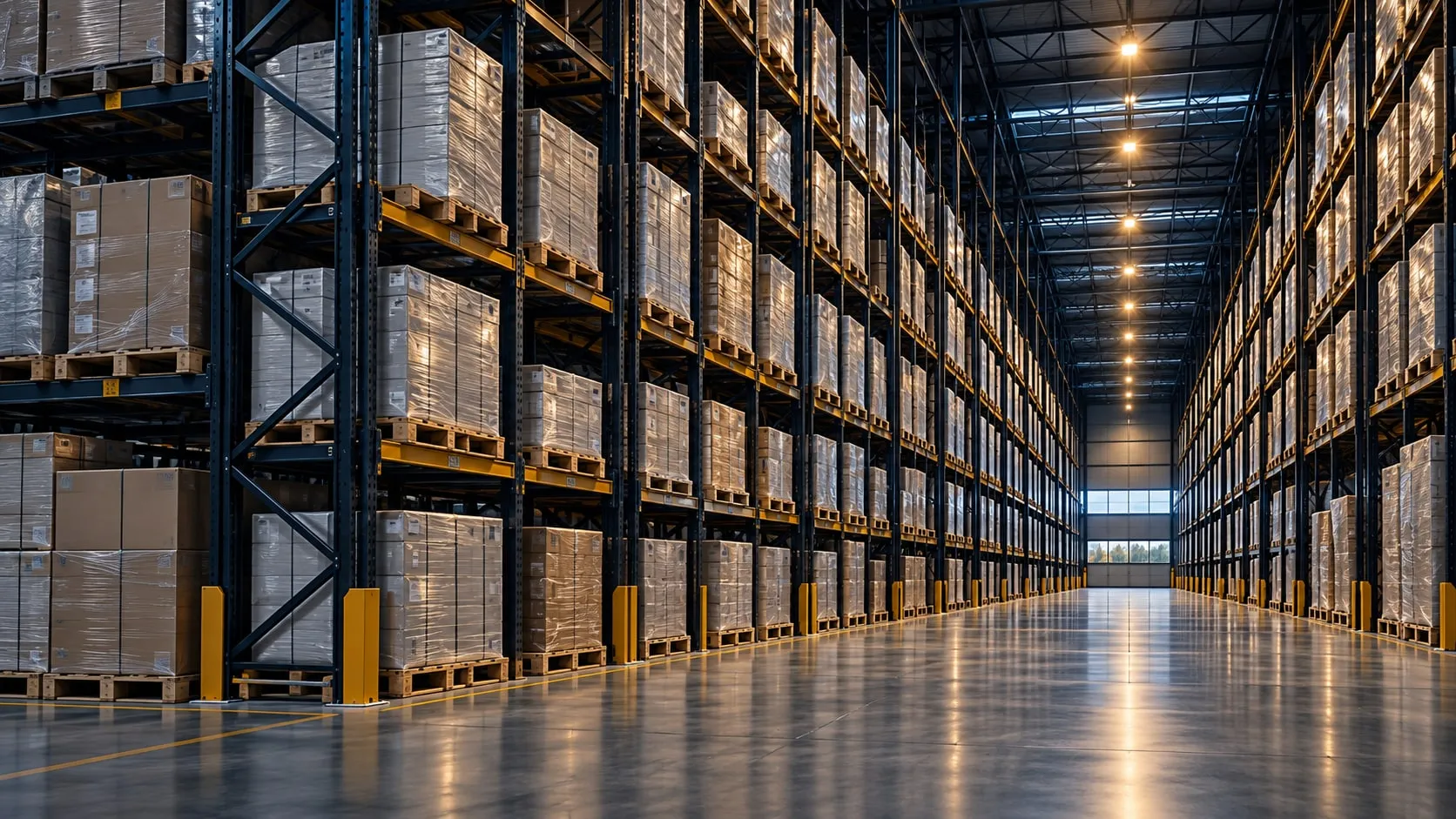
The archive stays in our Brescia warehouse, under cover, on pallets, in recorded positions. The boxes remain closed just as you handed them over: we work with the labels, not with the contents. Only our warehouse staff handle them, and every move is noted, so the recorded position matches the real one. If the archive grows over time, the new pallets are added using the same method. One customer's archive is never mixed with another's.
When you ask for a box
You need a file from a few years back. You give us the code of the box and the pallet it is on, as shown on your list. We go to the position, take down the pallet, pull out that box and check the label before it leaves. There is no need to shift half the archive or to search by trial and error: retrieval is quick and accurate because we already know where to go. You can ask for a single box or for several at once. We confirm which box we have taken out, so any mistake in the code comes to light before delivery.
Delivery and return
The retrieved box is delivered to your premises. We record that it has left, so the list shows that the box is with you and no longer on the pallet. When you have finished consulting it, it can come back to us, to its own position, with a new record. If it has to stay with you for good, we remove it from the storage list. At any time the list shows what is in the warehouse and what is out. Delivery comes with a document listing the codes of the boxes that have left.
Common mistakes with archives
The first is handing over boxes with no label or no list: an anonymous box among many others is, in practice, a lost box. The second is writing vague notes on the label, such as miscellaneous or old documents, which mean nothing to anyone a few years later. The third is using boxes that are flimsy or overfilled, which get crushed once stacked on the pallet. The fourth is not updating the list when a box goes out. We help you avoid them from the transfer stage onwards.
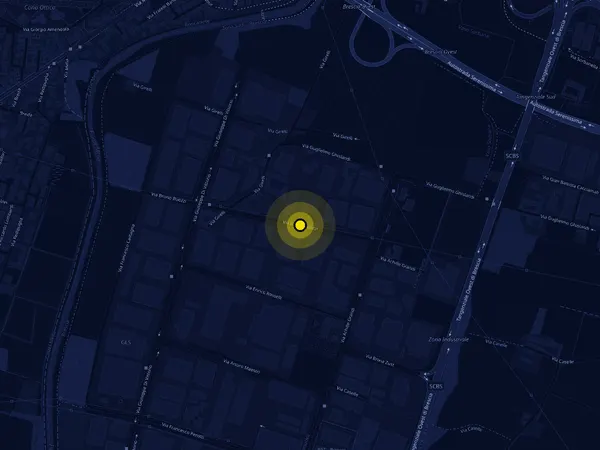
How to get started
To make you a proposal we need to know roughly how many boxes or pallets you have, where they are, whether they are already labelled and how often you expect to call documents back. Our team looks at the archive with you, suggests the way of moving it that works out best for you and follows it step by step, from the first pallet to the last box. We are in Brescia, at Via Bruno Buozzi 14, and have been working in transport and warehousing since 1956. You can also begin with part of the archive, for example the oldest years, and continue in stages.