Automotive shipping. Components and vehicles.
From the components that feed production lines to finished vehicles for export: we arrange road, sea and air freight for the automotive supply chain, with in-house customs and a contact who knows your flows.
The automotive chain cannot stop.
Manufacturers work to tight schedules: regular flows move by road across Europe, urgent parts for a stopped line go by air, and vehicles leave by sea in containers or on ro-ro vessels. We bring the three modes and the customs paperwork together.
Regular flows by road
Components and semi-finished parts to plants across Europe, from a single pallet to a full truck, on a schedule agreed with you.
Stopped lines, by air
When production is missing a part we book as IATA cargo agents, with operational support at Malpensa and Linate and door-to-door delivery.
Vehicles in containers or ro-ro
New and used cars and vehicles by sea: secured inside a 20' or 40' container, or driven on board a ro-ro vessel.
Inward and outward processing
Components entering the EU to be processed, or leaving it for processing and then coming back: our customs department handles the procedures.
Export documents
Export declaration and vehicle documents checked before loading, to avoid holds at the port or on arrival.
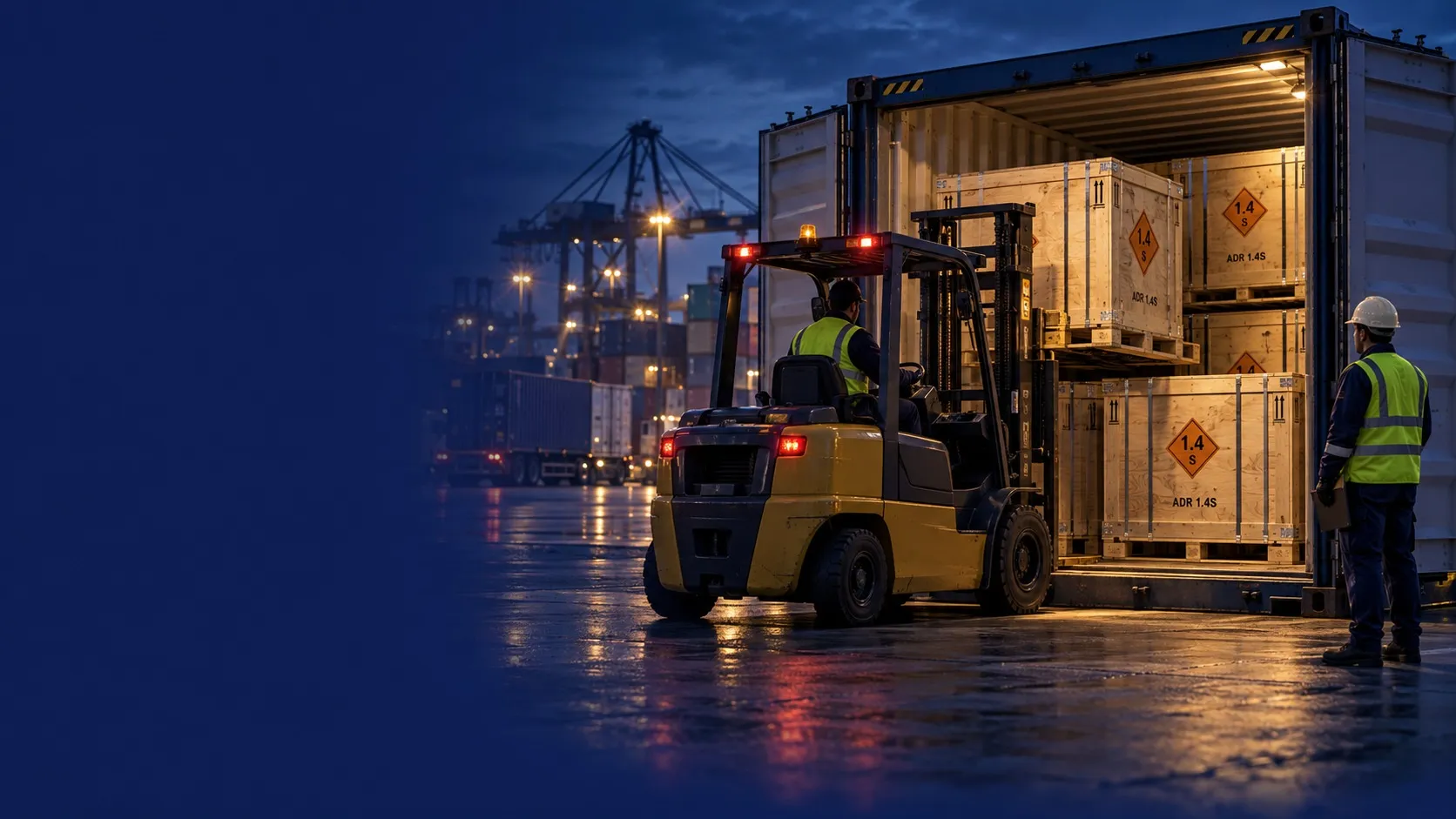
Vehicles as dangerous goods
By air and sea a vehicle with fuel or a battery generally counts as dangerous goods (UN 3166, UN 3171 or, for lithium batteries, UN 3556 and UN 3557): we prepare it under the rules of the chosen mode.
See also: Road freight · Sea freight · Spare parts shipping · Dangerous goods · Customs · Destinations · Request a quote
From plant to destination.
A schedule for regular flows, a fast lane for urgent parts.
Flow review
Components, frequencies, plants and vehicles: we learn what you ship and to what deadlines.
Choice of mode
Road for scheduled flows, air for urgent parts, container or ro-ro for vehicles.
Customs formalities
Export, processing procedures and vehicle documents prepared by our customs department.
Departure and arrival
Pickup, loading and delivery followed by your contact, who updates you at every step.
Questions about automotive shipping.
How do you ship a car abroad by sea?
In a container, where the car is secured inside, or on a ro-ro vessel, which it drives on and off. We choose with you based on destination, the value of the vehicle and the services available at the port, and we prepare the export declaration.
Container or ro-ro: which is better for shipping a vehicle?
A container protects the vehicle and lets you load spare parts or several vehicles together; ro-ro is practical for running vehicles where the route offers it. When both are possible, we set out the two options with the pros and cons for your case.
Can you help when a production line has stopped?
Yes. As IATA cargo agents we book space directly with the airlines, with operational support at Malpensa and Linate, and arrange door-to-door pickup and delivery. Your contact follows the part until it reaches the plant.
Is a car being shipped classed as dangerous goods?
Under air and sea transport rules a vehicle with fuel or a battery generally counts as dangerous goods: UN 3166 for fuel-powered vehicles, UN 3171 or, with lithium batteries, UN 3556 and UN 3557 for battery-powered ones. It must be prepared for the chosen mode, and our trained staff will tell you how to hand it over.
Do you handle outward processing for components?
Yes. Our customs department handles inward and outward processing: you need them when a component leaves the European Union for processing and then returns, or enters it to be processed and then re-exported.